Founded by Alan Russell in Chelsea in 1979, well-known boutique estate agency Russell Simpson has been steadily expanding beyond its original patch in recent years.

Kensington & Notting Hill came first, followed by Mayfair & Marylebone and, most recently, Fulham. But MD Bertie Russell has no particular ambition to turn the firm into another sprawling agency group.
In fact, he reckons its increasingly unusual position somewhere between the big corporate firms and the new generation of self-employed brokers could be one of its biggest advantages.
“The industry is changing dramatically, which is both scary and exciting,” he tells PrimeResi. “For the time being we seem to be one of few occupying the space between large corporates and brokers, which seems to be working in our favour.”
It’s an interesting place to be as the traditional agency model gets pulled in different directions. Consolidation continues at one end of the market, while brokerages and self-employed models proliferate at the other. Russell, meanwhile, is growing a second-generation family firm without wanting to lose the characteristics of the boutique it started as.
Here, he talks to PrimeResi about opening offices in a difficult market, what the broker revolution means for traditional agencies, the growing importance of brand, why social media can become a distraction, the increasingly domestic source of London’s wealth – and the question that’s occupying him more than any other: how to grow without losing what made the business work in the first place.
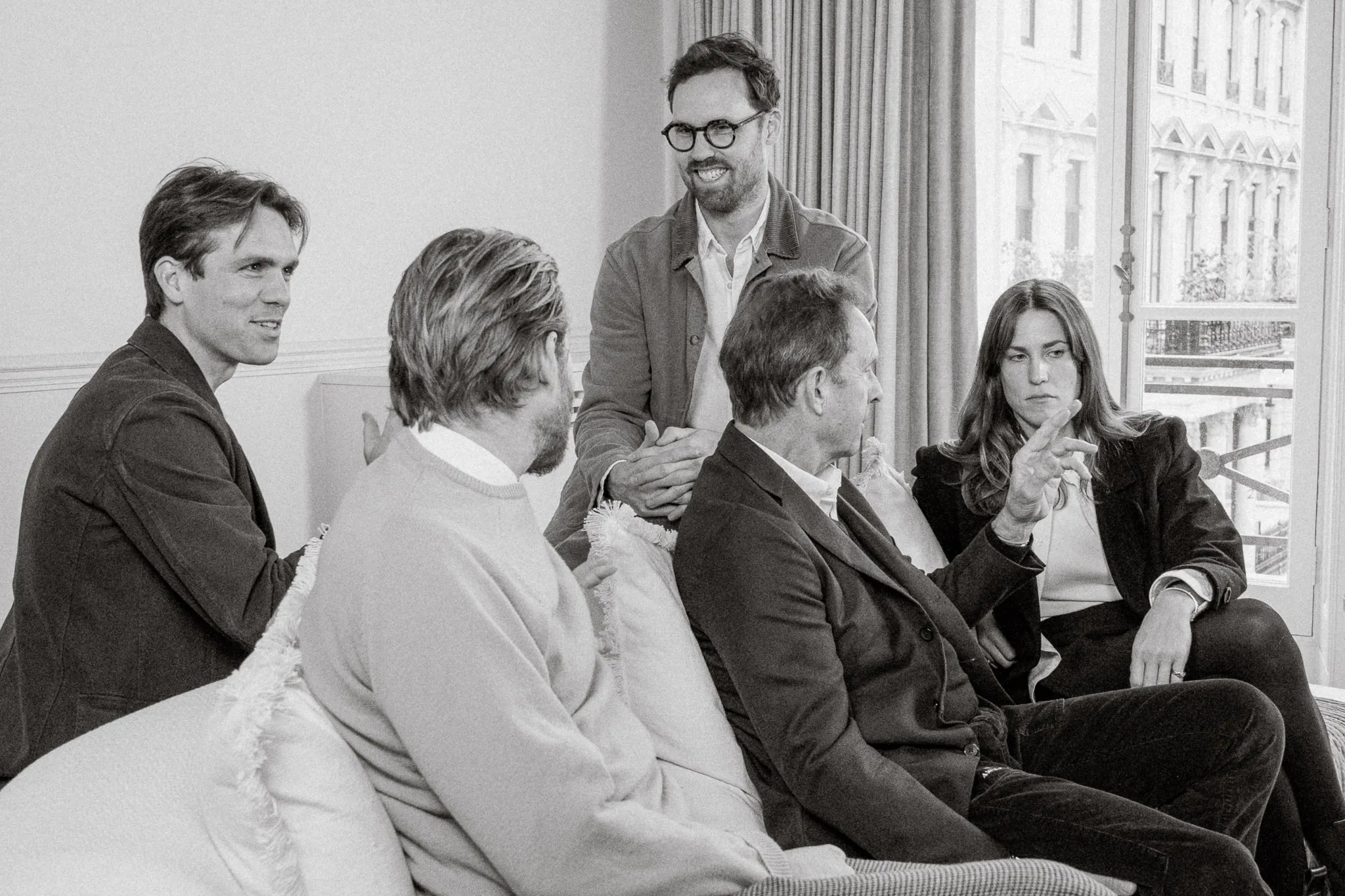
PrimeResi: Russell Simpson has been expanding beyond its Chelsea roots over the past few years, into Mayfair & Marylebone and, more recently, Fulham. Are you following demand, or do you see a gap opening up in those markets?
Bertie Russell: We had one office in Chelsea for 40 years. We opened Kensington & Notting Hill almost eight years ago due to demand overflowing from the Chelsea office. Mayfair & Marylebone was less about demand and more about opportunity. This is a very different market with different competition, and different buying and renting dynamics.
This is a challenging market but a very rewarding one if you can break in and achieve success. Fulham is an extension of Chelsea with very similar dynamics and community. We try not to waste time or energy thinking about competitors. Instead we aim to focus 100% on our clients with the aim to constantly improving and evolving the service we provide to them.
You’ve brought in Molly Derbyshire to spearhead Fulham. What made her the right person for the job, and what does success look like there over the next few years?

Starting a new office is tough and I have learnt it’s not for everyone. I am very excited we have found Molly. She has over ten years of experience in Fulham with the last five building an office in the area which was incredibly successful.
She has experience, energy, resilience, self-belief and alignment with our culture. I feel very confident we have the right ingredients for Fulham to be a great success for Russell Simpson – now the hard work starts!
The agency world seems to be polarising. At one end you’ve got the big consolidators, at the other a growing army of self-employed brokers. Where does the traditional boutique fit into that landscape?
The industry is changing dramatically which is both scary and exciting. There are both positives and negatives to learn from what others are doing and we are aiming to incorporate as many of the positives to our business as possible.
I feel we need to keep firm to our core belief of high quality service and for the time being we seem to be one of few occupying the space between large corporates and brokers which seems to be working in our favour.
Everyone seems to be launching a broker model at the moment. Is it a genuine evolution of the industry, or are we in danger of creating an increasingly fragmented market?
If you ask 10 people what their definition of a ‘broker model’ is you will get 10 different answers. I don’t think there are two businesses at the moment who are offering the same structure for the salespeople. I imagine this can be confusing at times but it also offers people flexibility and choice.
This is a moment of change and we will need more time to see how it plays out. Yes it may well create a more fragmented market but what I am already seeing is that quality and experience shines very brightly and I am sure this will continue to be sought after from sellers and landlords.
Russell Simpson has always traded on relationships and local knowledge, but you’re also one of the more active PCL firms on social media. How has marketing changed since you joined the business?

I am the eldest of six children all involved in the business. All of us studied art history or history and so have a core passion for visual aesthetic and history. We have a genuine interest in what things look like and the history of our neighbourhoods and the people who live within the community.
We also deeply care about providing the best service for our clients. Combine all three of those things and I guess you see what has been created over the recent years. It was always clear to us that we wanted our clients to be proud of how we presented their properties but what we have learnt is how powerful brand is.
With the help of our excellent Marketing team we have leant into evolving our content and brand over the last five years or so and seen an incredible benefit to our clients and Russell Simpson as a business.
Do the best agents now need to be content creators as well as negotiators?
Do you need to be a content creator to be a brilliant agent – the answer is no. Does having a large and curated audience help distribution of your properties – yes. Can content creation distract you from focusing solely on your clients’ best interests?
A lot of agencies still produce marketing that looks remarkably similar. What’s the trick to standing out when everyone is shooting videos, posting reels and talking about lifestyle?
I think you need to constantly be asking yourself, “Are you providing value?” There is SO much content these days and many try and shock or be controversial to gain attention. This is one route but not one I feel is right for our business. We aim to think carefully about whether the content we are sharing really provides value to the people receiving it.
The upper end of the market has remained surprisingly resilient despite a steady stream of tax and policy headwinds. What’s the mood among buyers and sellers right now? How far apart are they in terms of expectations, and what advice are you giving those waiting on the sidelines?
Generally speaking, with each neighbourhood and price range varying, prices have had to reduce in light of tax changes in recent years. This makes our job very tough. It’s easy telling people their homes have gone up in value but tough for people to come to terms with a loss from expectations.
It’s easy telling people their homes have gone up in value but tough for people to come to terms with a loss from expectations
We have had a very busy last five months which makes me feel perhaps there is a part of the market which is aligned. We aim to provide honest and accurate advice based on the market today. If people are unwilling to enter into that market for sale then quite often long or short term lettings is a great option.
Where in the prime market – both geographically and by property type – is demand currently strongest? And where are you finding it hardest to get deals done?
When the values are accurate there is a deep enough market across the board to get quick and successful transactions.

You teamed up with NYC brokerage Leslie Garfield last year; how has this changed the business and do you have plans for any more international partnerships?
This has developed into a very strong and valuable relationship. The largest pool of buyers outside of the UK is from the United States with many either directly from New York or with substantial links to the city. This has created value for our clients ensuring that we have our finger on the pulse of one of the most influential locations outside of London. At the moment we have a focus on expanding closer to home but we are always reviewing how to add more value to our clients and so we are keeping the option open to other partnerships.
What’s the most interesting instruction or deal you’ve worked on recently, and what did it tell you about where the market is heading?
London has had a tough time for the last three or so years and perhaps there are still more hard times to come. With the changes to taxation we have lost a few buyers and residents to other global cities but in their place we have found a more domestically driven market, with values decreasing but with needs based buyers and sellers active. The wealth we see on a daily basis is extraordinary and I am always proud to see it coming from UK sourced wealth. We have little control over whether the market is up or down and so we aim to keep our heads down working hard to achieve the best results for our clients.
If you’d asked PCL agents five years ago what the biggest challenge would be in 2025, most would probably have guessed wrong. What’s keeping agency owners awake at night now?
The broker model has caused a lot of disruption and this is something no-one would have guessed five years ago. Covid and the work from home culture was another hugely impactful yet unexpected shift. Perhaps the most important question for an agency owner is what will be the biggest challenge in the next five years?
Russell Simpson remains family-owned in a sector that’s seen plenty of consolidation. Has that become more of an advantage as the market has become bigger and noisier?
I feel we are in a lucky position now. We are not a tiny independent anymore, but we are not a large business. This means we can be nimble but with a little more scale than 10 years ago we can make a little more impact. I am very happy how we are positioned now. It feels like we are one of few sat in the middle meaning we are more differentiated than most of our competitors.
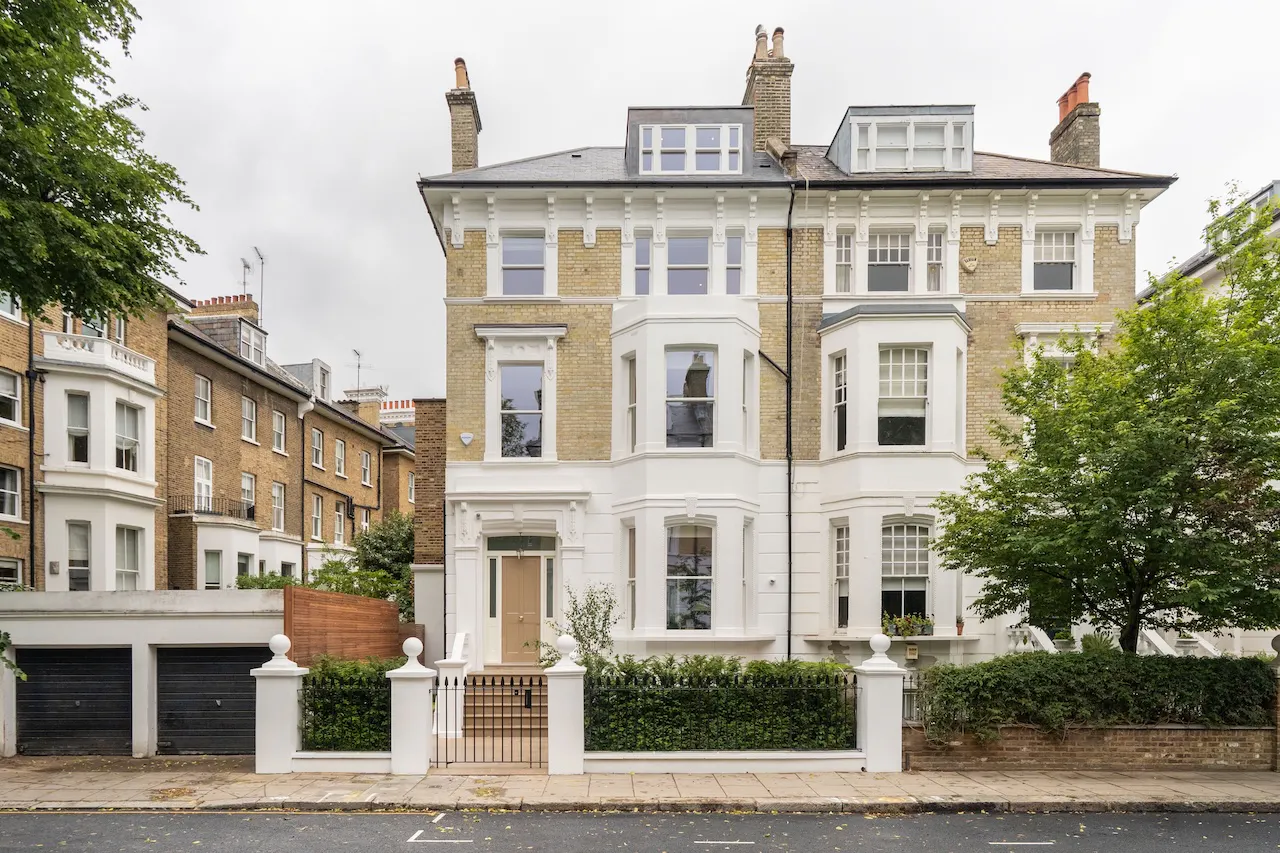
How do you grow without losing the qualities that made clients choose a boutique agency in the first place?
This is the number one question that is on my mind. If you have the magic bullet, please let me know.
Looking ahead, where would you like to see Russell Simpson in five years’ time?
I want us to be known for the best service in the marketplace, if not the world. I want us to continue to find more ways to offer value to our clients, customers and community.
Which widely held view about the London property market do you think is simply wrong?
People talk about the London property market as a whole but it is so many micro markets varying in confidence and demand. You need to find your expert in the sector your property falls into whether that be price, neighbourhood, and type.
What’s your latest cultural recommendation (e.g. book, film, exhibition, restaurant)?
I spend a day a week at our Mayfair office and I have been introduced to a wonderful builder’s café called Café L’Express. Cheap, quick and delicious breakfast and lunch. Double fried egg, double hash brown and brown sauce in a large white bap followed by a baked potato, butter, cheese and beans with a dollop of coleslaw!
What’s the best piece of advice you’ve received?
I’m not sure I’m very good at listening to advice. I want to make my own mistakes and learn through the struggle of trial and error.

Contact Book
- Bertie Russell
- Managing Director, Russell Simpson
- linkedin.com


