International Women’s Day tends to bring a flurry of platitudes. What’s more interesting is the reality: the messy, uncomfortable, occasionally accidental moments that actually shape a career. That’s what we asked the industry – female leaders from property agency and development to design, finance and advisory – ahead of International Women’s Day on 8 March. The prompt: what was the inflection point, and what happened next?
Some answers were dramatic. Others quietly profound. A few insisted there was no single moment at all – just a steady accumulation of decisions that nudged a career onto a different track.
A striking theme running through many of the stories is risk. Not the glossy, LinkedIn version of entrepreneurial bravery, but the more familiar version: leaving a secure job, starting a business without a safety net, stepping into a role that feels a little too big. Camilla Dell, for instance, describes launching Black Brick in 2007 as “jumping off a cliff”, while Jo Eccles recalls setting up Eccord at just 23 when the buying agency she wanted to join wasn’t hiring. Others took similar leaps from corporate life into independence – from Samantha Child, who left PwC to launch her own search business during Covid, to Jess Simpson, who walked away from a senior corporate role to build what is now Stoneacre Advisors.
Entrepreneurship – or at least autonomy – appears again and again. Olga Turner Baker founded wellbeing consultancy Ekkist before “healthy buildings” became a mainstream conversation. Lucy Tinkler launched her PR firm after a deeply personal family loss forced her to reassess everything. In each case the catalyst was slightly different, but the outcome similar: control over direction, culture and purpose.
Another clear thread is that many inflection points have nothing to do with a promotion or a deal. Parenthood features prominently. Sarah Kelly talks about the perspective gained during maternity leave, while Alice Molloy describes having to redesign both her life and her design studio simultaneously after becoming a mother. Others stepped away entirely for a period – Sarah-Jane Bingham-Chick paused her career to focus on family, in her words: “trusting that what I had built would still matter when I returned”.
And then there are the quieter moments of confidence: the promotion you almost don’t apply for, the meeting where you decide to speak up, the opportunity you take before you feel ready. Laura Hackney describes the moment she stopped waiting to be invited into senior conversations. Meriam Lock-Necrews recalls speaking candidly in a room full of industry heavyweights early in her career – and discovering that honesty builds credibility. Nina Coulter argues that careers are rarely transformed by a single dramatic decision at all, but by “small acts of courage accumulated over time” – a sentiment echoed by Naomi Heaton of LCP.

There are also reminders that the property industry itself is evolving. Several contributors reflect on the experience of working in environments that were once overwhelmingly male – something Amy Reynolds describes candidly – while others highlight the importance of mentorship and networks of supportive women along the way. Sarah Campbell, now marketing director at Valouran working on The Whiteley, credits the women who gave her early opportunities. Tamerah Couchman makes the case just as strongly for women actively championing each other, while Priya Rawal explains how some blunt advice from a trusted team gave her the confidence to go all in.
Taken together, the stories paint a picture of an industry where career paths are rarely linear. Some inflection points are planned, others entirely accidental – like Laura Dam Villena’s “sliding doors” train journey that led to her first real estate role. But almost all share one common ingredient: the decision to act despite uncertainty.
If there’s a takeaway from this year’s collection, it’s probably that transformation rarely arrives fully formed. More often it’s a moment of instinct, a leap taken slightly before you feel ready – and the long stretch of hard work that follows.
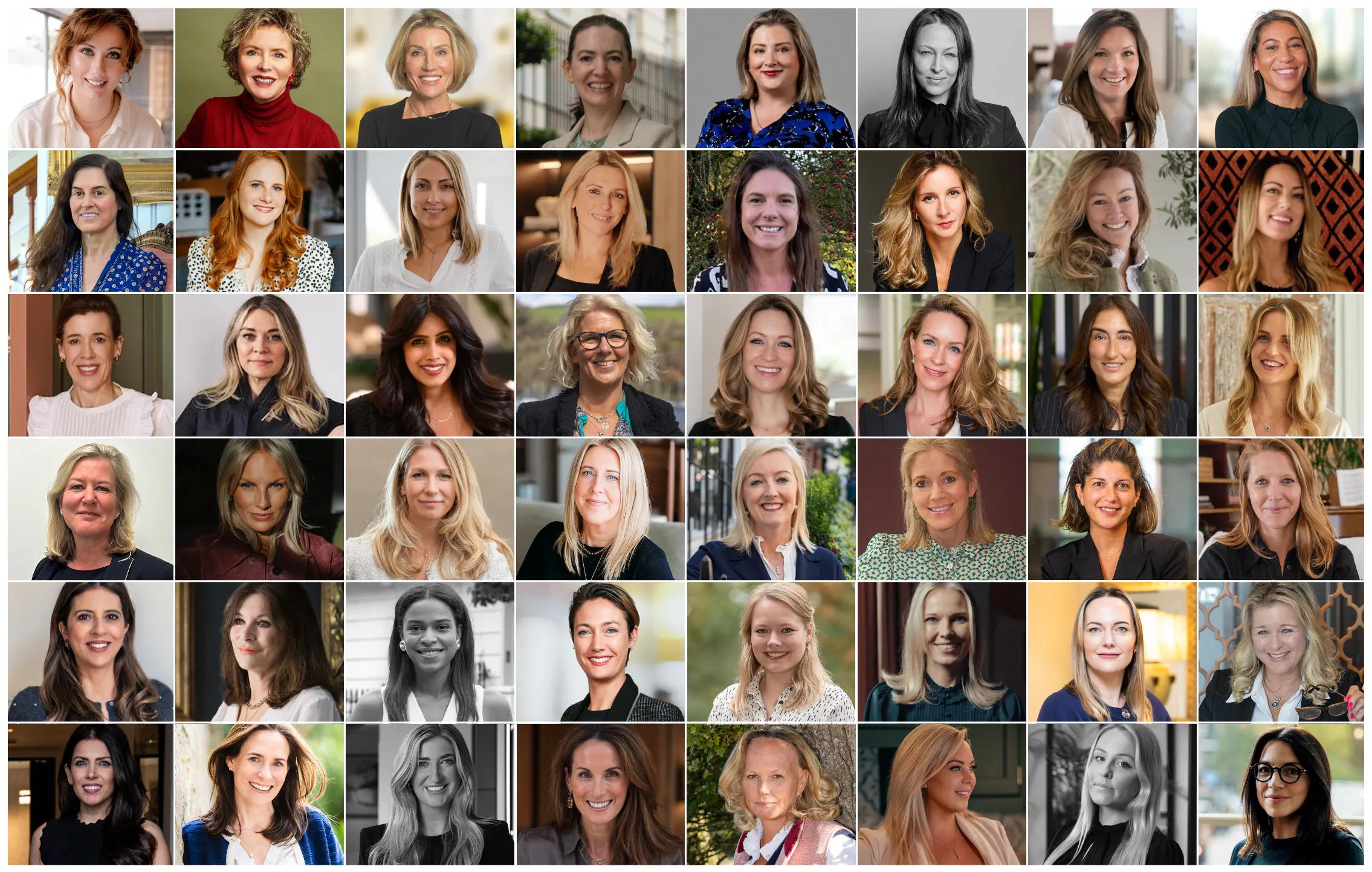
IWD2026: Inflection points & what came next
A post-lockdown board meeting
Anna Ambrose, National Head of Lettings at Strutt & Parker: I recall a particular board meeting at a previous firm as we emerged from the first Covid lockdown – it was the first in person board meeting for many months. Along with every business, we’d gone through a period of rapid change in our business model to protect people and keep things running smoothly for our clients. Coming into that first meeting I felt invigorated – the past few months had shown just how much we could do by embracing agility, virtual meetings, and flexible working, and I was excited to be part of driving this forward. But the tone of the meeting was different; it centred around ‘how can we return to business as usual?’.
I was in the minority in that room, I didn’t want things to just return to ‘business as usual’ when I’d witnessed how successfully we’d pivoted under pressure, placed trust in our people to perform away from the constant gaze of senior management, and I didn’t want to lose momentum. It was probably at that point that I knew my future career would likely be elsewhere. Agency is an industry that typically has been slow to evolve, but during the pandemic we saw people buying homes after virtual viewings, historically ‘in-person’ meetings being conducted from behind the kitchen table, and, reflecting now, I’m grateful that I stuck to my gut and recognised the value in embracing change. The pandemic brought out a lot of empathy in work interactions, and empathy drives change in business. Being confident enough to challenge the status quo, ask for clarity, question assumptions allowed me to see my future career in a different light.
 Anna Ambrose, National Head of Lettings at Strutt & Parker: I recall a particular board meeting at a previous firm as we emerged from the first Covid lockdown – it was the first in person board meeting for many months. Along with every business, we’d gone through a period of rapid change in our business model to protect people and keep things running smoothly for our clients. Coming into that first meeting I felt invigorated – the past few months had shown just how much we could do by embracing agility, virtual meetings, and flexible working, and I was excited to be part of driving this forward. But the tone of the meeting was different; it centred around ‘how can we return to business as usual?’.
Understanding that I didn’t have to do it all
Chanel Bailey, Director at Elevate PR: A defining moment in my life and career, was having my two children. A sentiment which I think many mothers will echo. Life before children was very focused on my career. Elevate PR was in its third year when I had my son, closely followed by my second son during lockdown.
Having two under two, whilst running a PR team of eight during a pandemic was challenging to say the least. Added to this we were building a house. Shortly after, my marriage ended, so separation and divorce followed.
The last 6 years have been the toughest and most challenging I have ever experienced. However, the whole experience has transformed how I approach home life and work. The women in my life – clients, friends and family got me through the hardest times.
As women, our generation was sold the dream of having it all. A dream which many of us fail to live up to. A turning point for me was understanding that I didn’t have to do it all. That I could choose to be a good mother first and foremost and I could still run and have a successful business and do a good job for my clients.
In 2025, after 10 years of running my business alone, Elevate PR merged with Ellwood PR (run by Adam Foster), a decision which created an entire support system in which we can thrive as a business and offer even more to our clients.
 Chanel Bailey, Director at Elevate PR: A defining moment in my life and career, was having my two children. A sentiment which I think many mothers will echo. Life before children was very focused on my career. Elevate PR was in its third year when I had my son, closely followed by my second son during lockdown.
Setting up my own business
Olga Turner Baker, Co-founder and MD of Ekkist: The risk to set up my own business in 2018 and form the very first consultancy dedicated to Health and Well-being in the Built Environment. Prior to this, there was almost no awareness of how buildings shape us and impact our health, so it was a huge education exercise for the first few years, before we became known for what we do and I started to get involved in various landmark projects, national and international panels and advisory boards on the topic. Now, we have worked with and advised some of the largest developers and professional organisations, including the Royal Institution of Chartered Surveyors (RICS), the BRE, International WELL Building Institute (IWBI), Construction Leadership Council, All Party Parliamentary Group on Healthy Homes and Buildings and worked with high profile developers such as Clarion, Peabody L&G, Barratt, Quintain, Landsec and Almacantar. Working with such a breadth of clients and property types has been a fascinating and very rewarding experience.
Since then, our second major decision was to launch a service we trialled as its own independent company and scalable proposition – the Healthy Homes Checklist. Similar to an EPC, but specific to health, it felt like the natural next step. Because to us, it seemed crazy that you can look up your EPC rating or council tax band in seconds, yet you have no idea of how your home is going to impact your health before you buy or rent it. It paid off and we have mapped 1,000 homes already since formally launching to the open market! We are now in the process of doing a funding round to scale up the firm and aim to map health and well-being across the 1.5 million new homes that the government plans to deliver. We have big plans!
What changed as a result?
Everything! I have the intellectual freedom to create new ideas that genuinely benefit the industry, work with wonderful clients and innovative construction projects, as well as on thought leadership initiatives that would otherwise never have been possible. I have the depth and breadth that I crave for in my day to work, as well as the chance to be creative and have a fantastic team working with me. I also have the flexibility to manage work and family life, with 2 young children. Running a business isn’t without its challenges, but overall, it’s an extremely rewarding and fulfilling experience.
 Olga Turner Baker, Co-founder and MD of Ekkist: The risk to set up my own business in 2018 and form the very first consultancy dedicated to Health and Well-being in the Built Environment. Prior to this, there was almost no awareness of how buildings shape us and impact our health, so it was a huge education exercise for the first few years, before we became known for what we do and I started to get involved in various landmark projects, national and international panels and advisory boards on the topic. Now, we have worked with and advised some of the largest developers and professional organisations, including the Royal Institution of Chartered Surveyors (RICS), the BRE, International WELL Building Institute (IWBI), Construction Leadership Council, All Party Parliamentary Group on Healthy Homes and Buildings and worked with high profile developers such as Clarion, Peabody L&G, Barratt, Quintain, Landsec and Almacantar. Working with such a breadth of clients and property types has been a fascinating and very rewarding experience.
The day my perspective shifted
Sarah-Jane Bingham-Chick, Director of Jackson-Stops Exeter: My defining inflection point didn’t happen in the office, it happened at home.
I was watching the news coverage of 9/11 when a headline appeared on the number of children who would go to bed that night without a parent. It stopped me in my tracks. I had been building a successful career in estate agency, but in that moment my perspective shifted. I didn’t want to look back and feel I had missed my daughter’s childhood.
So, I made a deliberate decision to step away from my career until my daughter started primary school.
It wasn’t about a lack of ambition. It was about taking a long-term view. A career spans decades. I believed that pausing didn’t mean stopping, it meant choosing and trusting that what I had built would still matter when I returned.
What changed as a result?
Coming back wasn’t instant. I had to build pace and visibility. But what quickly became clear was that estate agency, at it’s best, is not transactional, it is relational.
One of the most meaningful full-circle moments came through a house in Dartmouth. It was one of the first properties I sold after returning to estate agency after my time out. Over the past 20 years, I have now sold the same house four times. Last year, when I became a business owner with Jackson-Stops, that very same Dartmouth property became my first completion with the brand.
It felt symbolic, not simply because it was familiar, but because it represented continuity. The same house, two decades on, entrusted to me again. That is the essence of what I believe estate agency should be: relationships sustained over time, advice grounded in experience and trust earned slowly rather than chased quickly.
That philosophy is precisely why Jackson-Stops felt like a natural home for me. The brand is built on heritage, longevity and personal accountability, values that mirror how I have always worked. Acquiring the business last year wasn’t just a commercial decision; it was an alignment of ethos. In a challenging market, that steadiness and long-term perspective matter more than ever.
Today, one year into business ownership, I’m at the top of my profession and my daughter is thriving independently overseas. Stepping away didn’t interrupt my career. It strengthened its foundations.
That was my inflection point: understanding that success isn’t linear – and that when you build on relationships and trust, you can step back, step forward, and build something even more enduring.
 Sarah-Jane Bingham-Chick, Director of Jackson-Stops Exeter: My defining inflection point didn’t happen in the office, it happened at home.
To start a business and then to grow
Rutu Buddhev, Founder and Managing Director of Amara Property: There wasn’t one single dramatic moment that transformed my professional life. Instead, it was shaped by two defining risks — both uncomfortable, both uncertain, and both ultimately life-changing.
The first was the decision to start my own business.
Like many entrepreneurs, I didn’t begin with perfect clarity or fearlessness. In fact, the hardest part wasn’t strategy, funding, or even the work itself — it was taking that first step into the unknown. Leaving behind the security of a conventional path meant confronting a deep, internal tension: the pull between stability and possibility.
Starting Amara Property was both exhilarating and terrifying. It required a willingness to accept uncertainty not as a temporary phase, but as a constant companion. Yet that decision fundamentally changed my life because it gave me something profoundly valuable: control.
Not control in the sense of eliminating risk — property development is inherently cyclical and unpredictable — but control over direction, decision-making, and ultimately, accountability for outcomes. Successes became deeply rewarding; setbacks became deeply personal. Both shaped resilience.
The second inflection point came later, and in many ways proved even more demanding: the decision to grow.
Expansion is often romanticised as a natural progression, but growth introduces a new category of risk. Scaling Amara Property meant moving beyond being a founder-operator into becoming a leader responsible for people, systems, and increasingly complex decisions. More staff, more projects, more locations — and with that, more pressure.
Growth magnifies everything. It amplifies both strengths and vulnerabilities. It tests not only financial judgment, but emotional endurance. You are no longer managing tasks; you are managing uncertainty at scale.
What changed as a result was not simply the size of the business, but its identity.
Through deliberate growth, Amara evolved into a recognised brand defined by clarity of vision rather than opportunism. We became known for quality, for design-led thinking, and for a consistent belief in what luxury living should represent. That recognition did not arrive overnight, nor without stress — but it validated the conviction that thoughtful expansion, while difficult, can be transformative.
Looking back, both risks share a common thread: they required stepping forward before feeling entirely ready.
For women leaders in particular, this tension is often heightened. Confidence is rarely the absence of doubt; it is the decision to move despite it.
Those moments — choosing to begin, and later choosing to scale — did not simply shape my career. They reshaped my sense of agency, resilience, and purpose.
And in many ways, they continue to do so.
 Rutu Buddhev, Founder and Managing Director of Amara Property: There wasn’t one single dramatic moment that transformed my professional life. Instead, it was shaped by two defining risks — both uncomfortable, both uncertain, and both ultimately life-changing.
An early career commitment
Hollie Byrne, Estates and Special Projects, Middleton Advisors: The most transformative decision in my career came at its very beginning. Choosing to study Rural Enterprise and Land Management at Harper Adams University and ultimately qualifying as a Chartered Surveyor, fundamentally shaped my professional path, not only with the qualification but with the network of people I met. That early commitment set the direction for my career and provided the foundation on which everything since has been built.
My time at Harper Adams enabled me to achieve my RICS qualification, an internationally recognised accreditation that has opened doors to a wide range of opportunities within the property industry. Beyond the qualification itself, the experience was invaluable for the network I created within the agricultural and property industries. I met many like-minded peers and formed life-long friendships, many of whom continue to work in the industry today. Those connections remain an important part of my professional life and I am still in touch with several of them in my day-to-day role at Middleton Advisors.
 Hollie Byrne, Estates and Special Projects, Middleton Advisors: The most transformative decision in my career came at its very beginning. Choosing to study Rural Enterprise and Land Management at Harper Adams University and ultimately qualifying as a Chartered Surveyor, fundamentally shaped my professional path, not only with the qualification but with the network of people I met. That early commitment set the direction for my career and provided the foundation on which everything since has been built.
Pivoting from retail
Sarah Campbell, Marketing Director, Valouran: The pivot from retail to property changed the course of my career entirely. My background in both high street and luxury fashion has given me such a wonderful grounding for running the marketing and PR on The Whiteley.
It always comes back to inspiring women giving me a shot. My former Marketing Director at Knight Frank hired me as marketing manager with no prior property experience, and while it was a steep learning curve I always drew from my previous experience in a highly commercial environment. Bringing a heritage brand into a more contemporary space using better photography and more pared back design, was my focus at Knight Frank. Then Covid hit! Another opportunity arose, this time to work on the most iconic building to be redeveloped in London: The Whiteley. Hired by the former Marketing Director, and another inspiring woman and guiding force in my career, working on this building has transformed my career.
My interest in fashion and the luxury industry continues to inspire me. I have worked with incredible brands, from Chanel to Fabergé, and I have applied a ‘big brand’ approach to this building, shooting a conceptual campaign with legend Mark Seliger in New York, with Poppy Delevingne. I will never forget stepping onto set, where the team had rebuilt an apartment within his Greenwich studio!
Now as Marketing Director at Valouran, still working on The Whiteley and now on other developments alongside this, my position and experience have been heavily influenced by women who have supported and mentored me along the way. I have a strong bias towards working with female founded companies and agencies and have surrounded myself with a network of unstoppable women, all of whom I rely on to keep the show on the road! My career has been built on opportunities which they have afforded me.
 Sarah Campbell, Marketing Director, Valouran: The pivot from retail to property changed the course of my career entirely. My background in both high street and luxury fashion has given me such a wonderful grounding for running the marketing and PR on The Whiteley.
Taking the plunge and going it alone
Samantha Child of Samantha Child Property Search: In 2020, I made the decision that transformed my professional life. I left a nearly 16-year career at PwC to set up my own prime property search business across Surrey, West Sussex and Hampshire. On paper, it made very little sense. I had built a successful career within a globally respected firm. I was progressing well, working alongside exceptional colleagues and enjoying the security and prestige that comes with a major organisation. PwC shaped me both professionally and personally – it was my safe haven.
However, for a couple of years, a quiet voice had been getting louder. I felt increasingly drawn towards the property world (which was a long-standing passion of mine) and towards the idea of building something of my own. I wanted autonomy, creativity and the ability to shape a service around how I believed clients should truly be looked after. Then, just as Covid was unfolding, I took the plunge…
I moved from the infrastructure of a global firm to a desk at home, starting from scratch in an industry I hadn’t previously worked in. There was no brand, no pipeline, no established playbook. I had to deeply understand what my future clients would need, design a service from the ground up and build credibility in the prime property sector – all during one of the most uncertain periods in recent history. It was, without doubt, the biggest professional risk I have ever taken.
What changed as a result?
Everything changed. I went from being one part of a vast organisation to being wholly accountable for every decision, every client interaction and every outcome. There was no hierarchy to lean on and no established processes to follow. The responsibility was exhilarating and daunting in equal measure.
What surprised me most was not the fear, but the clarity. When you work for yourself, your values become your strategy. My clients are choosing me. They are entrusting me with finding not just a house, but the right home, at the right price, aligned with their lifestyle and long-term goals. That level of trust sharpens your focus – it makes you better. I work harder than ever, largely because I love what I do and because I am deeply conscious of delivering an exceptional experience. But alongside that intensity, I gained something I could never have had as an employee – control over my time. And that control is transformative. It means I can flex when I need to as a mother and wife. I can be present at important moments without asking permission. I can structure my work around outcomes rather than hours. The freedom isn’t about working less as in many ways, I work more, but about working on my terms.
Looking back, the true inflection point wasn’t simply leaving a firm. It was redefining what success meant to me. For years, success was progression, recognition and security within a respected institution. Today, success is autonomy, alignment and impact. Building something personal, purposeful and deeply client centred.
PwC gave me an extraordinary foundation. But stepping away gave me something even more powerful which is ownership of my future. And that, for me, changed everything.
What also changed was the outcome. From that desk at home, I built a prime property search business entirely from scratch. Today, more than 90% of my work comes through word of mouth and personal recommendation. We are frequently fully booked. That growth didn’t come from scale or marketing spend – it came from trust, discretion and delivering consistently strong results in a relationship-driven market. Building something organically and close to my heart has been one of the most satisfying achievements of my career.
 Samantha Child of Samantha Child Property Search: In 2020, I made the decision that transformed my professional life. I left a nearly 16-year career at PwC to set up my own prime property search business across Surrey, West Sussex and Hampshire. On paper, it made very little sense. I had built a successful career within a globally respected firm. I was progressing well, working alongside exceptional colleagues and enjoying the security and prestige that comes with a major organisation. PwC shaped me both professionally and personally – it was my safe haven.
Overcoming my self-doubt
Tamerah Couchman, Head of Marketing and Client Experience at Strutt & Parker: We all hold limiting self-beliefs about ourselves, but I suspect that as women we hold more. Overcoming these, making choices, and taking risks can be transformational for your career. We see it in the jobs we don’t apply for despite being more than qualified, in the way we fear how other women will perceive us, and in the permission we give ourselves to speak up in certain environments.
My real-life example of this was a pivotal moment mid-way through my career where an internal position, two levels up from me, became vacant. Whilst I was confident that I was qualified and experienced enough to do a great job, I held back because my belief said, ‘that’s not what you do’ and ‘don’t get above your station, especially not as a woman’. It dawned on me that the only thing holding me back was this belief and this voice in my head. What I needed to overcome to seriously be considered for the job was my own self-doubt. So, I put all my energy into suspending that belief and guess what happened? I interviewed and got the job.
In role at board level in my mid-20s, half the average age of my fellow board members (almost exclusively men) and managing my previous peers, I had to work even harder to overcome limiting self-beliefs and keep the whispers of ‘am I an imposter?’ at bay. I persevered and succeeded, learning that magical things can happen when you remove limiting beliefs that you hold about yourself and (crucially) the ones you believe others hold about you.
Since then, I lead and operate with empathy and have built a leadership style around lifting my teams up, coaching them to dismantle their own limiting beliefs, elevating and encouraging them out of their comfort zones, serving them rather than expecting them to serve me. I have sought to recruit people with collaborative attitudes who are much more skilled than I am in many ways and seek to provide the tools they need to grow, and take them with me as they do so. And as a feminist, I’m evangelical about the support women give to one another. When women genuinely mentor, guide, and champion fellow women, they create a community where ambition is nurtured and achievements are celebrated. This solidarity helps break down barriers, it isn’t just an act of kindness, it’s an investment in collective progress that can lead to greater representation, more equitable workplaces, and lasting change.
 Tamerah Couchman, Head of Marketing and Client Experience at Strutt & Parker: We all hold limiting self-beliefs about ourselves, but I suspect that as women we hold more. Overcoming these, making choices, and taking risks can be transformational for your career. We see it in the jobs we don’t apply for despite being more than qualified, in the way we fear how other women will perceive us, and in the permission we give ourselves to speak up in certain environments.
Small acts of courage accumulated
Nina Coulter, Savills head of Residential Development Sales, Executive Director:For me, there wasn’t a single defining moment, bold leap, or dramatic turning point that transformed my professional life. Instead, my career has been shaped by a series of small, deliberate decisions made consistently over time—quiet choices that pushed me slightly beyond what felt safe or familiar. Each time I volunteered for a project I wasn’t sure I was ready for, each time I raised my hand in a room where I felt intimidated, and each time I chose to silence the voice of self‑doubt, I took another step toward the career I have today.
Those decisions weren’t always comfortable. In fact, many of them felt like risks precisely because they required confronting the internal barriers we don’t often talk about—imposter syndrome, perfectionism, the fear of being “found out.” Early in my career, I often believed I needed to be 100% ready before saying yes to an opportunity. What changed everything was realising that readiness is rarely a prerequisite for growth. By saying yes first and figuring it out as I went, I slowly built a track record of capabilities that I might never have discovered had I waited for confidence to arrive on its own.
Over time, these small acts of courage accumulated. They strengthened my belief that I deserve to be in the rooms I’m in today. They taught me that confidence isn’t something bestowed upon you—it’s something you build through action. More importantly, they helped me recognise the power of momentum: small steps, consistently taken, create big change. Similar to selling Prime New Build!
As a result, my professional life today looks very different from the one I once imagined. I now lead in environments where my voice is heard, my judgement is trusted, and my contributions have impact.
If there’s one message I hope other women take from my journey, it’s this: transformation doesn’t always come from a single bold decision. Sometimes it comes from choosing, again and again, to back yourself—especially on the days you don’t feel ready.
 Nina Coulter, Savills head of Residential Development Sales, Executive Director:For me, there wasn’t a single defining moment, bold leap, or dramatic turning point that transformed my professional life. Instead, my career has been shaped by a series of small, deliberate decisions made consistently over time—quiet choices that pushed me slightly beyond what felt safe or familiar. Each time I volunteered for a project I wasn’t sure I was ready for, each time I raised my hand in a room where I felt intimidated, and each time I chose to silence the voice of self‑doubt, I took another step toward the career I have today.
Going for a big opportunity
Phillippa Dalby-Welsh, Head of Savills Country Department: My career changing moment happened in 2018. I was on maternity leave from my head of office position and certainly didn’t see the opportunity coming at the time as my daughter was just three months old! I was asked if I wanted to apply for the role of co head of Prime Central London, I knew this would be a huge step up for me and a leap in responsibility overseeing several PCL offices.
I chose to apply, taking a leap of faith, and to my amazement got the position. I had to make the decision before I’d even thought about transitioning back to work. It felt like mountain to climb! Needless to say it was a huge learning curve and felt at points very uncomfortable, even terrifying, at the time, but looking back now it was the best decision I ever made.
What changed as a result?
The role forced me into a different sphere of management and I became much more involved in strategic decisions. It was a time of change, we had increasing access to data which brought analytical benefits and its own conundrums, namely being mindful not to lose personal touch. It was a case of learning to be data fluent in the background while having greater managerial responsibility for several offices and maintaining my finger on the pulse by continuing to deal with clients directly.
So much has followed from that one decision, I doubt I would be leading Savills Country House Department or sitting on Savills UK board if hadn’t made the leap back then. It continues to shape me today.
 Phillippa Dalby-Welsh, Head of Savills Country Department: My career changing moment happened in 2018. I was on maternity leave from my head of office position and certainly didn’t see the opportunity coming at the time as my daughter was just three months old! I was asked if I wanted to apply for the role of co head of Prime Central London, I knew this would be a huge step up for me and a leap in responsibility overseeing several PCL offices.
A true ‘sliding doors’ moment on the train home
Cluttons’ Laura Dam Villena, Head of London Residential Agency: The defining moment of my career was, unexpectedly, a stroke of luck – but one that taught me the power of backing yourself and stepping into the unknown. My path has taken me from a planned international surveying career into London agency, through leading high‑performing residential teams, and now to Cluttons, where I’ve worked with our brilliant sales teams to drive significant revenue growth in my first year. Every step has reinforced a simple mantra that nothing changes unless you’re willing to step outside your comfort zone.
But there was one standout inflection point, a true “sliding doors” moment, that changed everything that followed. In 2007, while studying for a Master’s in International Real Estate, I travelled to London for a graduate interview, which felt like a bit of a failure after unsuccessfully trying to convince two traditional commercial agents that East London would boom post‑Olympics. (Shoreditch later proved my point.)
Feeling deflated, I boarded the train home and happened to sit opposite two men discussing a residential valuation in St Tropez, which was the very world I dreamed of working in. As I took out a research report I’d been reading, I realised one of the men had written it. That coincidence sparked a conversation about my ambitions that lasted the entire journey.
Two months later, I was interviewing with their European Valuations team, and soon after, started my graduate role. It opened the door to the industry I’d always wanted to be part of and ultimately led me into the fast‑paced world of London residential agency, where I truly found my stride.
I often wonder what would have happened if I’d sat somewhere else on that train. But that moment taught me an invaluable lesson that luck may open the door, but you must be ready to walk through it. When an opportunity appears, expected or not, the power to transform your future lies in your own hands.
 Cluttons’ Laura Dam Villena, Head of London Residential Agency: The defining moment of my career was, unexpectedly, a stroke of luck – but one that taught me the power of backing yourself and stepping into the unknown. My path has taken me from a planned international surveying career into London agency, through leading high‑performing residential teams, and now to Cluttons, where I’ve worked with our brilliant sales teams to drive significant revenue growth in my first year. Every step has reinforced a simple mantra that nothing changes unless you’re willing to step outside your comfort zone.
A TV show application opened a different door
Camilla Dell, Managing Partner at Black Brick: There are two moments that transformed my professional life. The first was when I was working at Foxtons. I had been there 2 or 3 years and was starting to get an “itch” to move on and do bigger things. I decided to apply to “The Apprentice” which back then was a serious business show! I got right down to the final few and ended up being on standby for the show. Being on the show wasn’t meant to be, but as a result I was promoted at Foxtons (Jon Hunt’s favourite show at the time was The Apprentice and he thought it was pretty cool that I was almost selected!), and I ended up staying at Foxtons another year running their renewals and relets business.
The second was my decision to leave The Buying Solution/Knight Frank after less than a year to set up Black Brick in January 2007. At the time it felt like I was jumping off a cliff, but deep down I knew that setting up my own firm was something I had to do and would regret for the rest of my life if I didn’t. I was also lucky to have an extremely supportive husband who told me at the time “what is the worst that can happen? If the business fails, you will always have a roof over your head and food on the table.” Those few words gave me the confidence to do it, and I have never looked back since. Black Brick will be celebrating 20 years in January 2027.
What changed as a result?
Running Black Brick has given me the greatest professional joy. I had been quite an unhappy employee in the years running up to Black Brick. The growth and success of the business have been far greater than I ever expected, and even though it’s been nearly 20 years, I still feel as passionate about the business as I did when I first set it up. Of course, running a business also has its sacrifices – time away from home and children, but I do think my children now see me as a role model and hopefully inspired to become entrepreneurs themselves one day. I also get immense joy from mentoring and nurturing my team and seeing them grow professionally. The business we are in is incredibly tough and competitive, but I firmly believe Black Brick is the best buying agency out there and that’s down to the team as well.
 Camilla Dell, Managing Partner at Black Brick: There are two moments that transformed my professional life. The first was when I was working at Foxtons. I had been there 2 or 3 years and was starting to get an “itch” to move on and do bigger things. I decided to apply to “The Apprentice” which back then was a serious business show! I got right down to the final few and ended up being on standby for the show. Being on the show wasn’t meant to be, but as a result I was promoted at Foxtons (Jon Hunt’s favourite show at the time was The Apprentice and he thought it was pretty cool that I was almost selected!), and I ended up staying at Foxtons another year running their renewals and relets business.
Taking a risky decision
Emma Dreike, Ebury Founding Director: A defining moment for me came around the age of 30 when I was given the opportunity to build a new division within a PR agency which didn’t specialise in real estate. Looking back, it was quite a risky decision given I’d never been tasked with securing new business before and was used to working with a big team around me.
This new venture initially required a significant amount of independent work, accepting sole responsibility for building my arm of the business and pressure to meet targets. I was mentored throughout by a very supportive boss and my real estate division was born.
Having this experience, whilst still working under the umbrella of an established and successful agency, taught me so much and gave me the confidence to go it totally alone a number of years later alongside my co-founder Emily Lewis. Together we launched our own agency in 2017, Ebury Comms, which will be 10 years old next year. I’ll always be grateful for this initial opportunity which I regard as a pivotal point in my career.
 Emma Dreike, Ebury Founding Director: A defining moment for me came around the age of 30 when I was given the opportunity to build a new division within a PR agency which didn’t specialise in real estate. Looking back, it was quite a risky decision given I’d never been tasked with securing new business before and was used to working with a big team around me.
Learning from great leadership
Polly Ogden Duffy, Managing Director at John D Wood & Co: It wasn’t a single moment but working for a brilliant boss who could chuckle in the face of adversity was pivotal for me. Seeing someone lead with that kind of calm confidence and perspective changed the way I viewed leadership.
It made me recognise that the best leaders in business aren’t those who criticise or apply all consuming pressure. They are the ones who support and “inflate” their people – who build them up, back them and give them the confidence to thrive.
That experience has shaped the person I am in business today. It’s influenced how I lead, how I respond to challenges, and how I try to create an environment where people feel supported as much as possible.
 Polly Ogden Duffy, Managing Director at John D Wood & Co: It wasn’t a single moment but working for a brilliant boss who could chuckle in the face of adversity was pivotal for me. Seeing someone lead with that kind of calm confidence and perspective changed the way I viewed leadership.
Stepping into uncertainty
Katie Earl, Creative Director, HBA Residential:Stepping away from my role as Creative Director at Hudson & Mercer in 2015 was the moment that transformed my professional life. Leaving an established position to co-found No.12 meant stepping into uncertainty – but it gave me complete creative independence and the clarity to define my own design philosophy.
That decision changed everything. Instead of working within an existing framework, I was building one – shaping a contemporary classical language that felt elegant yet responsive, refined but never rigid. It led to work on some of London’s most significant residential projects, including leading the creative vision for the communal areas and amenities at Gasholders London in King’s Cross and private residences in superprime addresses such as Hamilton Terrace in St John’s Wood.
That philosophy came with me when I joined HBA Residential as Creative Director in 2023. While HBA offers global scale, I focus on bringing a boutique sensibility, ensuring every project has narrative and human touch.
This can be seen at The Delmore in Miami, where interiors respond to light, water and horizon, layering texture and detail for a contemporary yet intimate waterfront lifestyle, and at The Whiteley in London, where heritage architecture is carefully restored and layered with a refined contemporary language – creating spaces that honour history while supporting modern living.
Choosing growth over comfort has defined my career. Each risk strengthened my creative conviction and expanded the impact of my work.
 Katie Earl, Creative Director, HBA Residential:Stepping away from my role as Creative Director at Hudson & Mercer in 2015 was the moment that transformed my professional life. Leaving an established position to co-found No.12 meant stepping into uncertainty – but it gave me complete creative independence and the clarity to define my own design philosophy.
Choosing complete autonomy
Jo Eccles, Founder and Managing Director of Eccord: For me, the most transformative point was setting up Eccord 20 years ago.
I had been working in property PR for a year beforehand and knew I wanted to be a buying agent, but the one firm I wanted to work for wasn’t hiring, so I concluded my only option was to set up on my own.
I was 23 years old and that was the start of the incredible career I’ve had so far and continue to love.
Having complete autonomy enabled me to design every element of our service around ‘what would I want if I were a client?’.
I worked for big corporates in my early career and discovered that I am truly happiest having the freedom and agility to make decisions quickly and without committee, and every day I feel extremely lucky to continue to have that.
 Jo Eccles, Founder and Managing Director of Eccord: For me, the most transformative point was setting up Eccord 20 years ago.
I was number one in the company, but I knew in my gut I was no longer happy
Becky Fatemi, Executive Partner, UK Sotheby’s International Realty: There is never a perfect moment to take the leap. For me, the defining risk was leaving Foxtons in 2011. On paper, I was thriving. I was number one in the company, earning well and backed by a powerful brand. But I knew in my gut I was no longer happy.
The real risk was leaving without a plan. After months of going back and forth, I handed in my car keys and walked out. Setting up Rokstone on my own made it even more daunting. I was a single mother, a woman of colour in a male-dominated industry, and I was walking away from security to back myself entirely. Financially, emotionally and reputationally, it was a leap. But that first client, where I went above and beyond despite barely making money, reminded me to trust myself.
What changed as a result?
The shift was profound. I left behind security, a prime office and a phenomenal client book, with no guarantee people would follow, but I gained was freedom and authenticity. Rokstone allowed me to build on my own terms and, over time, complete more than £8 billion in transactions before partnering with UK Sotheby’s International Realty.
More importantly, the risk gave me purpose and scope to do more. It allowed me to found Shadow to Shine, mentoring young people who lack access and confidence, and to co-found BlackBook, a tech platform supporting emerging creatives. Beyond success, it gave me agency to create opportunity for others.
 Becky Fatemi, Executive Partner, UK Sotheby’s International Realty: There is never a perfect moment to take the leap. For me, the defining risk was leaving Foxtons in 2011. On paper, I was thriving. I was number one in the company, earning well and backed by a powerful brand. But I knew in my gut I was no longer happy.
Starting a family
Miriam Frowein, Miriam Frowein Interiors: The most significant turning point in my professional career came when I started a family — a moment that, I believe, reshapes the perspective of many women.
Instead of automatically returning to my previous role as a real estate lawyer at an international law firm after maternity leave, I began to question a decision I had made at 18: pursuing a career in corporate law. With a strong growth mindset and an openness to change, I realised that at 33, I understood myself far better than I had at 18.
While I have always loved advising people, I felt increasingly drawn to move beyond purely legal frameworks and into the creative world of aesthetics — a space where I could unite my passion for contemporary art with my deep interest in interior architecture and design.
What changed as a result?
My entire career took a new direction when I made the decision to start my own studio and pursue formal studies in interior design.
I stepped into a field that truly reflects who I am — one that aligns with my strengths, my creativity, and a way to interact with people on their journey creating sophisticated homes.
 Miriam Frowein, Miriam Frowein Interiors: The most significant turning point in my professional career came when I started a family — a moment that, I believe, reshapes the perspective of many women.
Gaining a global outlook
Victoria Garrett, Savills Head of Global Residential (excl UK):The moment that I feel was the catalyst for transforming my professional life was moving from working in Prime Central London to being part of setting up the residential business for Knight Frank in Dubai and across the Middle East.
At the time I had an 18 month old baby and since then have had a second son, moved to Asia for seven and a half years and travelled across Greater China, South East Asia, Australasia and India. As a result of my experience on the ground – living, breathing and understanding those markets firsthand – I started at Savills and relocated back to the UK nearly two years ago with my family.
I am so grateful for the amazing experiences and personal and professional growth my roles have given me living and working across two different continents over the past 14 years. It has shaped my outlook to be truly global and positioned me in great stead in my current role.
 Victoria Garrett, Savills Head of Global Residential (excl UK):The moment that I feel was the catalyst for transforming my professional life was moving from working in Prime Central London to being part of setting up the residential business for Knight Frank in Dubai and across the Middle East.
Consistency has been the key
Amelia Greene, Savills Head of Lettings, UK Board Director: There was no key moment or event that transformed my career; consistency has been key and focusing on what really matters, our clients, the people I work with and the success of our business.
After joining Savills came the realisation that I’d joined a company with a culture I felt comfortable with; a business that facilitated and supported growth and individualism and in which I knew I could thrive. By making the most of the opportunities around me even when I felt exposed or out of my comfort zone.
I am now UK Head of Lettings and I know every experience of every day of my career has afforded me this position. There’s a lot to be said for recognising there’s more to come in terms of my own learning and development and so much of that comes from the brilliant team around me and the clients we work with.
 Amelia Greene, Savills Head of Lettings, UK Board Director: There was no key moment or event that transformed my career; consistency has been key and focusing on what really matters, our clients, the people I work with and the success of our business.
Deciding to make an impact
Chanelle Gray, Savills Head of Diversity & Inclusion, UK Board Director: Until I joined Savills, I had been a career civil servant, working across a number of government departments. I was a HR generalist leader supporting large, multi-disciplinary teams, but a period of personal reflection made me consider the wider impact I wanted to have in my career. That ultimately led me to move out of the public sector and into the property industry.
It was a risk, but one that has paid off immensely. While both the public and private sectors have valuable lessons to offer one another, the property industry’s strong people focus made me realise that I had made the right decision very quickly. It has enabled me to have true impact, not just within Savills but across the wider industry, leading a group of peers from across the property sector to work together to drive long lasting inclusive and cultural change. Together, we have run collaborative events, upskilled our Employee Resource Group (ERG) leads, participated in industry research and data collection, and even taken our activity to MIPIM. I’m really pleased with the journey our industry is taking and excited for what’s to come.
 Chanelle Gray, Savills Head of Diversity & Inclusion, UK Board Director: Until I joined Savills, I had been a career civil servant, working across a number of government departments. I was a HR generalist leader supporting large, multi-disciplinary teams, but a period of personal reflection made me consider the wider impact I wanted to have in my career. That ultimately led me to move out of the public sector and into the property industry.
I stopped waiting to be invited and started taking my place
Laura Hackney, Partner and Head of Knight Frank’s South East New Homes: Working in new homes for many years, I learnt early on that although the property sector itself was relatively balanced, the surrounding world of development, construction, and architecture was still heavily male dominated. I often found myself as one of the few, and sometimes the only, woman in the room. It was an environment where decisions were made quickly, opinions were delivered loudly, and confidence was often mistaken for expertise.
My inflection point came when, at an early stage in my career, an opportunity for promotion come up. At the time although I knew I was capable, I was also acutely aware that very few women had progressed into senior roles within the sector. It would have been so easy to hold back and assume someone “more typical” for the industry would be chosen, or to talk myself out of trying.
Instead, I decided to put my hat in the ring. It was a risk – both professionally and personally. I knew I would be entering a workplace where I would be scrutinised more closely and expected to work harder to prove myself. But I also knew that if I didn’t take that step, I would be reinforcing the very barriers I wanted to break.
That decision changed the direction of my career. Not only did I secure the promotion, but I realised something fundamental about my strength in the workplace: being a woman in a male dominated construction environment was not a disadvantage – it was an asset.
The promotion had given me visibility, but it also gave me purpose and what I began to realise was that the biggest shift for me was internal. I stopped waiting to be invited and started taking my place; I began speaking up more assertively and backing my own decisions.
That single moment of choosing to go for the promotion wasn’t just about career progression. It was a personal declaration that I would define my own trajectory. It shaped who I am today: someone who is resilient, people‑driven, commercially-minded, and unafraid to challenge the status quo.
Raising my daughter while building my career has also taught me how to juggle multiple demands, stay calm under pressure, and maintain momentum even when the path wasn’t all that straightforward. Those same skills shaped the way I approach my work: understanding people, motivating teams, navigating competing expectations, negotiating with confidence, and building strong relationships with agents and partners who trusted me with their clients.
And now, as my daughter grows older, I hope she sees that inflection points often begin with a simple act of self-belief: deciding that you are worthy of the opportunity and stepping forward to claim it.
 Laura Hackney, Partner and Head of Knight Frank’s South East New Homes: Working in new homes for many years, I learnt early on that although the property sector itself was relatively balanced, the surrounding world of development, construction, and architecture was still heavily male dominated. I often found myself as one of the few, and sometimes the only, woman in the room. It was an environment where decisions were made quickly, opinions were delivered loudly, and confidence was often mistaken for expertise.
A return to London – from the other side of the world
Nina Harrison, Buying Agent at Haringtons UK: The decision that transformed my professional life was moving back to London in 2014 after seven years in Sydney. Before we left, I had spent 12 years as a buying agent, but stepping away from the London market for that long felt risky. Property moves quickly, and I was not at all sure I could re-establish myself.
Returning required a leap of faith. I had to network from scratch, reconnect with contacts, and rebuild momentum. A meeting with a former colleague proved pivotal, leading to a job offer and a list of clients to start buying for immediately. I was straight back in, even back on a scooter, covering a market that felt bigger and faster than the one I had left.
Almost everything had changed. Portals had reshaped client expectations, making the process more transparent and competitive. London felt far more global, with higher service demands. Leaseholds were more complex, safety regulations tighter and anti-money laundering rules significantly more rigorous.
That move did not just restart my career; it reshaped it. Rebuilding after a long pause made me more adaptable, commercially sharp, and resilient, and ultimately better equipped to guide clients through an increasingly complex market.
 Nina Harrison, Buying Agent at Haringtons UK: The decision that transformed my professional life was moving back to London in 2014 after seven years in Sydney. Before we left, I had spent 12 years as a buying agent, but stepping away from the London market for that long felt risky. Property moves quickly, and I was not at all sure I could re-establish myself.
There are always more stepping stones ahead
Naomi Heaton, Executive Chair of LCP Private Office: I don’t believe there is ever one single transformational moment. In my experience, it’s a series of stepping stones – each one building quietly on the last – that ultimately lead you somewhere you may not have originally imagined. Perhaps it began with having an ambitious mother who encouraged me to apply to Oxford at a time when there were six men to every woman. That early lesson, to step into rooms where you may not yet feel represented, certainly shaped me. Or maybe it was my decision to begin my career in advertising, where I developed a deep understanding of consumer motivation, branding and the power of relevant messaging – skills that later proved invaluable in property.
There was also my determination, at a young age, to buy property in London whatever it took. Becoming a doer-upper in W1 taught me first-hand about value creation, risk and vision. From there came the recognition of a clear gap in the market: buyers investing in Prime Central London needed representation not just for acquisition, but for selection, renovation and long-term management. That insight led me to establish LCP Private Office in 1990.
Years later, another shift emerged. I saw a growing demand from tenants who wanted the flexibility of long-stay living combined with hotel-level service and a sense of community, and from hotel guests who wanted to live more like locals. That understanding led to a joint venture with a major pension fund and the launch of The Other House in South Kensington, followed by acquisitions in Covent Garden and Belgravia. It was about responding to how people truly wanted to live and quietly reshaping the hospitality model in the process.
What changed as a result?
What has changed most is the deep satisfaction that comes from creating something genuinely new, relevant and beautiful. Something that not only fills a gap in the marketplace but improves the way people live. Seeing an idea evolve from concept to reality and knowing it has made a tangible difference, is enormously rewarding. But I’ve learned that there is never a final destination. There are always more stepping stones ahead. My current role as Executive Chair at LCP Private Office is where I’m now focused on launching the next venture, informed by decades of experience, but always looking forward. The journey, as ever, continues.
 Naomi Heaton, Executive Chair of LCP Private Office: I don’t believe there is ever one single transformational moment. In my experience, it’s a series of stepping stones – each one building quietly on the last – that ultimately lead you somewhere you may not have originally imagined. Perhaps it began with having an ambitious mother who encouraged me to apply to Oxford at a time when there were six men to every woman. That early lesson, to step into rooms where you may not yet feel represented, certainly shaped me. Or maybe it was my decision to begin my career in advertising, where I developed a deep understanding of consumer motivation, branding and the power of relevant messaging – skills that later proved invaluable in property.
Pivoting to the world of luxury
Natasha Heyes, Senior Interior Architect at Finchatton: The turning point in my career was moving from the ultra-large-scale world of Foster + Partners into the highly detailed, high-end environment at Finchatton. This pivot allowed me to step out of the large-scale commercial design bubble and see exactly how a luxury residence comes together from every angle, from the initial budget through to the final delivery.
It transformed my professional life by filling some of the “missing links” in my architectural foundation, bridging the gap between a structural shell and the lived experience. By mastering everything from the first brick to the final fabric selection, I’ve become a much more well-rounded professional who truly understands how to bring a private home to life from start to finish. Being in such a collaborative and supportive team at Finchatton has given me the confidence and ambition to further my career in a creative environment that I really enjoy.
 Natasha Heyes, Senior Interior Architect at Finchatton: The turning point in my career was moving from the ultra-large-scale world of Foster + Partners into the highly detailed, high-end environment at Finchatton. This pivot allowed me to step out of the large-scale commercial design bubble and see exactly how a luxury residence comes together from every angle, from the initial budget through to the final delivery.
Finding my niche, and going for it
Laylah Holmes, Founder and Creative Director of Holmes Bespoke: I studied fashion at university and spent a few years working in the industry. Although I had a great experience and learnt a lot, I found myself wanting to try something new. I’d always had a passion for interiors, so I decided to explore interior design. I ended up working at an interior design studio, but I always knew I wanted to work for myself.
While working at a design studio in Chelsea, an opportunity came up to freelance for a rug company and, I decided to go for it. After a few years, I found my niche in bespoke rug design and launched Holmes Bespoke.
My background has shaped the way I approach interiors; I’ve always believed that the two align well. Whether you’re designing for the body or the home, it’s important to understand the core elements like proportion, flow, and way the design interacts with everything else. It also taught me the importance of fabric, colour, texture and detail – that instinct naturally informs my rug design process. These influences begin with fabric and form from my early fashion days.
 Laylah Holmes, Founder and Creative Director of Holmes Bespoke: I studied fashion at university and spent a few years working in the industry. Although I had a great experience and learnt a lot, I found myself wanting to try something new. I’d always had a passion for interiors, so I decided to explore interior design. I ended up working at an interior design studio, but I always knew I wanted to work for myself.
Stepping up as CEO
Rayna Hunter, CEO of LH1 Global: One of the most defining inflection points in my career was the decision to step fully into the role of CEO at LH1 Global.
I had been Managing Director, deeply involved in strategy and growth, but becoming CEO felt different. It wasn’t just a change in title, it was a moment of ownership. It represented progression in an industry where female leadership at senior level is still relatively scarce, particularly within investment and development-focused real estate. Stepping into that role brought a real sense of pride – not only personally, but in what it represents for visibility and representation in our sector.
Another earlier turning point came when I chose to leave a successful career in Events Management to enter the real estate industry. It was a deliberate risk. Property is traditionally male dominated, commercially intense and culturally very different from the events world. I had to adapt quickly – to new language, new pace, new negotiation dynamics. But what I came to realise was that the crossover between the industries became one of my greatest strengths. Events teaches you how to read rooms, build relationships, manage pressure, and communicate clearly – all critical skills in property, particularly within high-value transactions.
Rather than feeling I had to “fit in”, I learned to bring those strengths with me.
There have been other moments that reinforced that journey – being nominated as a finalist for the International Women in Property Awards was one of them. It felt less like personal recognition and more like a signal that the industry is evolving, that different leadership styles are being acknowledged and valued.
More recently, speaking candidly in The Times about the lack of transparency and communication within the conveyancing system was another inflection point. Challenging established processes publicly is not always comfortable, but leadership sometimes means being willing to say what needs to be said. Progress in our industry depends on it.
If I look back, the moments that mattered most were the ones that required conviction, stepping into leadership, moving industries, and being visible in spaces where women are still underrepresented.
Each decision compounded. And each one reinforced that leadership is not about fitting a mould – it’s about reshaping it.
 Rayna Hunter, CEO of LH1 Global: One of the most defining inflection points in my career was the decision to step fully into the role of CEO at LH1 Global.
Taking a risk and leaving steady employment
Bari Jerauld, Founder of Blank Slate Studio: The inflection point was leaving an established business in 2014 to found Blank Slate Studio. I’d worked for several designers and brands before that, but I wanted creative freedom—to build an authentic brand and implement my own vision for how a design studio could operate. The scariest part was the instability. Leaving steady employment meant real financial risk, and there was genuine fear of failure. No safety net, no guaranteed clients, just the belief that there was space for the kind of work I wanted to do and the trust in myself to make it happen.
What changed as a result?
Everything. Over twelve years, I’ve been able to grow the business slowly and steadily on my own terms—taking on a small number of projects at a time, focusing on quality and thoughtfulness rather than volume. The biggest gain has been building a team of like-minded creative people and creating a collaborative environment where we continue to learn and grow together. We now work across the US, UK, and Europe on projects that feel genuinely meaningful. Looking back, the risk was absolutely worth it. I wouldn’t have the studio we have now if I hadn’t taken that leap.
 Bari Jerauld, Founder of Blank Slate Studio: The inflection point was leaving an established business in 2014 to found Blank Slate Studio. I’d worked for several designers and brands before that, but I wanted creative freedom—to build an authentic brand and implement my own vision for how a design studio could operate. The scariest part was the instability. Leaving steady employment meant real financial risk, and there was genuine fear of failure. No safety net, no guaranteed clients, just the belief that there was space for the kind of work I wanted to do and the trust in myself to make it happen.
Changing a strategy
Sophie Jones, MD, We Stay: The defining point came in 2023; a year that not only reshaped the trajectory of We Stay, but also my approach as a leader.
In its early growth phase, We Stay scaled rapidly under an expansive acquisition model. The priority was momentum; properties were onboarded across a broad range of sizes, types and locations to build portfolio mass quickly. The strategy delivered growth, but it also introduced operational complexity and inconsistent commercial performance.
In 2023, it became clear to me that scale without selectivity dilutes value, so I took the decision to refine the portfolio to align exclusively with a luxury, experience-led positioning. The short-term commercial impact was significant and projected revenue was effectively reduced overnight but I held my nerve and today We Stay has scaled to over £80m in assets under management and evolved beyond a traditional property management operator, into a multi-revenue luxury hospitality platform”.
What changed as a result?
True leadership isn’t about scaling indiscriminately, it’s about knowing what not to scale. That year taught me that courage in business is discernment. Stepping back, refining the model and rebuilding with clarity created a business that is more profitable, more resilient and more ambitious. Scale should amplify value, not dilute it..
The reset was not a retreat. It was a strategic inflection point, one that repositioned We Stay from a growing operator into a category-defining luxury hospitality brand, now poised for national expansion.
 Sophie Jones, MD, We Stay: The defining point came in 2023; a year that not only reshaped the trajectory of We Stay, but also my approach as a leader.
Joining a management team that built a major brand
Liza-Jane Kelly, Savills Head of London Residential: Joining Savills in 2018 provided a new challenge, environment and the opportunity to be part of a business I had always admired. It’s been over 25 years that I have worked in London property and while some decisions have been bigger than others, I can safely say that it has been a thoroughly rewarding path to take.
A career defining moment, which led me to where I am today at Savills, was being approached to join the management team at Marsh & Parsons and later acquiring and growing the business from 6 to 15+ offices when we sold the company in 2012. When my business partner and I took over we embarked on a full scale project; putting in place everything from HR to IT systems as well as restructuring the sales and lettings teams. It was more than a decade of solid, hard work and after twelve years we had built a well-respected brand known throughout London.
Throughout my career I have always tried to adopt a positive mindset and seek out the opportunities to learn – whether from colleagues, others around me or life’s rich tapestry of experiences. Demonstrating empathy, giving your teams room to grow and progress and instilling trust in them are all aspects of leadership that are important to me. I feel just as strongly about giving back to and supporting the younger generation so that they too can carve out their own pathway and take the steps that will transform their own professional lives as they develop in their careers.
 Liza-Jane Kelly, Savills Head of London Residential: Joining Savills in 2018 provided a new challenge, environment and the opportunity to be part of a business I had always admired. It’s been over 25 years that I have worked in London property and while some decisions have been bigger than others, I can safely say that it has been a thoroughly rewarding path to take.
Leading a team at home
Sarah Kelly, Executive Director, Prime, Residential, SPF Private Clients: Without a doubt, my career-defining moment followed the arrival of my identical twin boys, now almost nine. Overnight, I moved from leading a team at work to leading a team at home — one with far greater demands, and far less predictability.
Maternity leave gave me something I had never previously allowed myself: pause. For the first time in my career, I had space to reflect on what I actually wanted, rather than simply progressing along the path in front of me. That reflection led me to move from private banking into mortgage broking — a shift that proved far more significant than I initially realised.
Just before I went on leave, I remember being told in a performance review that ‘Sarah could sometimes use more perspective’. The comment related to my tendency to go into battle over credit policy or client process. I cared deeply and I fought hard — but perhaps without always choosing my ground carefully.
Perspective, it turns out, was exactly what I gained.
Returning to work, I approached situations differently. I became more measured and far more focused on controlling the controllable. Rather than reacting, I assessed. Rather than escalating, I considered. The drive and ambition were still there — but paired with patience and judgement.
In a role like mine, switching off entirely is rarely realistic. But I became clearer about my boundaries. When I am at work, I am fully present. When I am at home, I am Mama first. That clarity has strengthened rather than weakened my professional relationships. Clients respect honesty and structure. They don’t need constant availability; they need reliability, sound advice and trust.
Perhaps the most profound shift, however, has been empathy. Supporting clients through complex financial decisions requires technical expertise, but it also requires emotional intelligence. We rarely know what is happening behind the scenes in someone’s life — pressure, uncertainty, responsibility. Becoming more aware of that has made me a better adviser and, ultimately, a better leader.
While this chapter of my life coincided with becoming a parent, the defining change was not motherhood itself. It was perspective. It is understanding that ambition and balance are not opposites. And that success feels different when it is aligned with who you are, not just what you achieve.
 Sarah Kelly, Executive Director, Prime, Residential, SPF Private Clients: Without a doubt, my career-defining moment followed the arrival of my identical twin boys, now almost nine. Overnight, I moved from leading a team at work to leading a team at home — one with far greater demands, and far less predictability.
Stepping back proved the most powerful way to move forward
Toto Lambert, Partner, The Buying Solution: The moment that truly transformed my career was, paradoxically, the moment I chose to step back. After ten years in a fast‑paced corporate sales environment, I made the bold (and frankly terrifying) decision to leave and take a six‑month sabbatical. It was the pause I desperately needed; the break gave me the space to reconsider not just what I wanted my career to look like, but how I wanted it to feel. That pause ultimately led me into buying agency and where I am today.
During those six months, I travelled, deepened my yoga studies, learned a new language, and rested more than I had in years. That time helped me rebuild trust in my own instincts and reconnect with the parts of myself that had been overshadowed by KPIs and quarterly targets. And while many assumed I would turn to full-time yoga teaching and leave property behind, what I discovered was something different: a renewed desire to shape a new chapter in my property career – one centred on connection, trust, and truly supporting people through pivotal moments in their lives.
That realisation led me directly to buying agency. My first and only call was to Will Watson at TBS, and from that moment, everything aligned. I’m now part of a team that not only champions individuality but actively celebrates it. Ultimately, my “Give to Gain” was permission to pause, opening the door to a career that feels both meaningful and energising. It taught me that stepping back isn’t stepping away; it’s often the most powerful way to move forward.
 Toto Lambert, Partner, The Buying Solution: The moment that truly transformed my career was, paradoxically, the moment I chose to step back. After ten years in a fast‑paced corporate sales environment, I made the bold (and frankly terrifying) decision to leave and take a six‑month sabbatical. It was the pause I desperately needed; the break gave me the space to reconsider not just what I wanted my career to look like, but how I wanted it to feel. That pause ultimately led me into buying agency and where I am today.
The moment I spoke up
Meriam Lock-Necrews, Chief Commercial Officer at Battersea Power Station Development Company: The defining moment in my career happened in my early twenties, sitting in a weekly meeting for one of the most prestigious residential developments in London — arguably in the world.
The room was full of senior figures: powerful developers, industry heavyweights. At the time, London’s super-prime market was becoming increasingly competitive. Product quality was rising across the board, yet this particular scheme wasn’t performing as well as expected.
The developer asked a simple question: Why? Everyone in the room knew the answer. No one was saying it. I was young — by far the youngest in the room — and acutely aware of that. But I also knew the issue was structural and needed to be addressed. So I said it.
There was a pause. The kind of silence where you wonder if you’ve just made a career-ending mistake. But instead of defensiveness, there was respect.
The developer acknowledged that what I’d said was true — and that they were surprised no one else had voiced it. That moment changed everything for me. Not because I was “right,” but because I realised something fundamental: Candour builds credibility.
From that point on, I was trusted not just to sell, but to advise. My role evolved from transactional to strategic. I went on to lead the Prime Central London team, building a significant pipeline and guiding clients through some of the most volatile cycles the super-prime market has seen.
What changed as a result was not just my career trajectory, but my leadership style. I learned that honesty — even when uncomfortable — is often the most valuable currency in a room. Particularly as a young woman in an environment where it can feel safer to stay quiet.
That early inflection point shaped the next decade of my career. It gave me the confidence to speak with clarity, to challenge constructively, and to lead with transparency — principles that still underpin how I operate today.
 Meriam Lock-Necrews, Chief Commercial Officer at Battersea Power Station Development Company: The defining moment in my career happened in my early twenties, sitting in a weekly meeting for one of the most prestigious residential developments in London — arguably in the world.
Returning to my roots
Gemma Maclaran, Director of Prime Purchase: The moment which transformed my professional life was the decision to return to the Cotswolds. I grew up in a hamlet near Sherborne and Burford, before heading off to Newcastle University. I then followed the traditional path of moving to London for a job, working in financial services communications and investor relations.
After that, I worked as an estate agent for several years before switching to the buying side. But it was having my two children which really focused my mind on what was important and what sort of childhood I wanted for them. I realised it was to grow up in the countryside as I had done. I wanted them to have more space and freedom than they had in Shepherd’s Bush, where we seemed to dodge death by bus every few seconds travelling around London on a scooter. At the same time, I realised I wanted a more fruitful and fulfilling role in the workplace.
While I realised we had outgrown London, it took a while to decide on a return to the Cotswolds. We searched around Hungerford and Newbury and in that general direction as it would be easy for my husband to commute to work in London. But then we found our dream house in Guiting Power, between Stow and Cheltenham – and crucially, the part of the Cotswolds where we really wanted to be – and having links to family and friends there made it an easier move.
I was just about to hand in my notice and search for a new job when my colleague who covered the Cotswolds patch announced he was leaving. The timing was extremely fortuitous, and it all came together almost seamlessly. I already had a ready-formed network to base my career on and friends to introduce the children to.
The move has been even better than I ever dreamed it would be. None of us has looked back and regretted it. It was a massive life transition, but everything is so much of an improvement. My job is more fulfilling; there is so much joy in going to see a lovely country house and I am so lucky that in this job I drive around surrounded by beautiful scenery and villages. It is a privilege. For the children, it has also been a big transition – they were aged four and six when we moved, and they now have space to run around both at home and at school. It is a much gentler way of life. My husband commutes to London two days a week, which is also completely do-able.
Making that move out of London to the Cotswolds and it all involves enables me advise clients who are treading a similar path; you have to put together a huge jigsaw of schools, jobs, tying in purchases, selling and buying, finding the right area – and I am here to help them do it.
 Gemma Maclaran, Director of Prime Purchase: The moment which transformed my professional life was the decision to return to the Cotswolds. I grew up in a hamlet near Sherborne and Burford, before heading off to Newcastle University. I then followed the traditional path of moving to London for a job, working in financial services communications and investor relations.
A new understanding – and perspective
Anna Masello, RE Branding & Marketing Director, The One Atelier: One of the defining inflection points in my career came when I chose to move from traditional real estate marketing into the emerging space of branded real estate. At the time, it was often viewed as a niche extension of luxury branding rather than a standalone strategic discipline. Stepping into that world meant embracing complexity — working at the intersection of global lifestyle brands, high-value development and diverse cultural contexts across Europe, Asia, the US and the Middle East.
The real shift, however, was not geographical or professional — it was philosophical. I began to understand that branded real estate is not simply about aesthetics or name association. It is about translating identity into space in a way that resonates both emotionally and commercially. That required a different kind of leadership: understanding buyer psychology, navigating cross-cultural sensitivities and, at times, challenging short-term commercial pressures to safeguard long-term brand value.
What changed was my perspective on influence and responsibility. I stopped seeing myself purely as a marketing lead and began to operate as a brand custodian — someone accountable for ensuring that globally recognised names retain their integrity when expressed through architecture and design. In markets that move quickly and compete aggressively for prestige, that discipline requires conviction.
That decision strengthened my confidence to lead with clarity, particularly in complex international environments. It reinforced my belief that leadership is not about visibility alone — it is about protecting vision, championing coherence and shaping spaces that will endure culturally as well as economically.
 Anna Masello, RE Branding & Marketing Director, The One Atelier: One of the defining inflection points in my career came when I chose to move from traditional real estate marketing into the emerging space of branded real estate. At the time, it was often viewed as a niche extension of luxury branding rather than a standalone strategic discipline. Stepping into that world meant embracing complexity — working at the intersection of global lifestyle brands, high-value development and diverse cultural contexts across Europe, Asia, the US and the Middle East.
Becoming the first female MD on the board
Jo McDonagh, Managing Director North, London Square: The moment that transformed my career was unexpected but I knew it was the right thing to do – even though it took me in an entirely new direction.
My first job in property at the age of 20 was a Sales Manager in Hamptons land and new homes team, which opened my eyes to so many different developers/housebuilders and their unique offerings. I moved developer side two years later as wanted to be involved in the whole journey and see a development come to life. After nearly 12 years at Shanly Homes, I joined London Square as sales and marketing director at the height of the pandemic in 2020. The challenges facing the business, and every business, were enormous. We had to navigate the lockdowns and restrictions on personal contact and continue to talk to potential buyers and sell homes. We needed to be highly creative and agile – a very odd start to a new role!
Out of adversity comes opportunity. London Square’s investment in strengthening its digital presence and capabilities at a time when face-to-face contact with customers was being regulated by government policies was a gamechanger, allowing us to interact with customers in completely new and different ways. I was promoted to Group Sales and Marketing Director in 2021, leading an incredible sales and marketing team who worked hard, to deliver record results.
London Square’s Chief Executive Officer Adam Lawrence called me into his office in June 2023 and told me he wanted me to take over as Managing Director of London Square North. It was totally unexpected – and yet a wonderful moment. I was so proud that Adam had faith in my capabilities to promote me to become the first female MD on the board at London Square.
This meant a move away from my traditional background of sales and marketing on to an entirely new level of operation – being responsible for overseeing and driving acquisitions, design and delivery, building homes of all tenures, with a new focus on prime. I have seen through eight deals in the past three years, ranging from the landmark Westminster Tower, a former convent site in Tite Street, in the heart of Chelsea, a boutique restoration and conversion development at Brook Green in West London, to major regeneration sites in Willesden, Crayford and Stratford. I am hugely fortunate to be working with an exceptional management team and a region full of highly experienced and great people allowing us to strive for excellence at every juncture and achieve great things.
My advice to anyone in our business is: when an opportunity is offered, be bold and back yourself. I did – and it’s been the best move of my career.
 Jo McDonagh, Managing Director North, London Square: The moment that transformed my career was unexpected but I knew it was the right thing to do – even though it took me in an entirely new direction.
Moving to London
Rhianne McIlroy, Prime Central & South West London, Middleton Advisors: The decision to move to London undoubtedly had the greatest impact on my professional life.. and life in general. Following an 8 year period of working on luxury cruise lines, I took a risk to further myself and my career in a place bigger than my hometown. I landed in an agency, which led to a successful career in sales and subsequently in buying, none of which would have happened in good old Northamptonshire!
As a result, I was able to meet people from a much more diverse set of backgrounds; women in particular, who had big thoughts and visions and a genuine belief in themselves to make things happen. The progression I have seen in myself and my career over the last 10 years has been amazing and I’m excited for the 10 years to come.
 Rhianne McIlroy, Prime Central & South West London, Middleton Advisors: The decision to move to London undoubtedly had the greatest impact on my professional life.. and life in general. Following an 8 year period of working on luxury cruise lines, I took a risk to further myself and my career in a place bigger than my hometown. I landed in an agency, which led to a successful career in sales and subsequently in buying, none of which would have happened in good old Northamptonshire!
Stepping into a top role
Kate Moisson, Head of Rural at Strutt & Parker: The pivotal chapter in my career was saying ‘yes’ to becoming Head of Rural at Strutt & Parker, as the first woman to lead the division in a typically male dominated industry. Before taking on the role, I had been part of leadership teams, but stepping into that top role was different. Going from shared responsibility to full accountability for performance, direction, and culture, during a time where the wider rural economy was under pressure, was daunting but also incredibly exciting.
It made me realise that leadership isn’t about knowing everything or having all the answers; actually it’s about asking better questions, and holding a clear vision. It means I have to tap into my own courage in my decision making.
The biggest change since taking the leap into this position was my perspective on business; being clear on expectations, and intentional about fostering an environment which embraces high standards, recognition of success, and fairness. It’s meant leading with conviction even when confronting difficult decisions. Not only was it a personal turning point for me, it echoed a quiet shift in what leadership in rural consultancy can look like.
 Kate Moisson, Head of Rural at Strutt & Parker: The pivotal chapter in my career was saying ‘yes’ to becoming Head of Rural at Strutt & Parker, as the first woman to lead the division in a typically male dominated industry. Before taking on the role, I had been part of leadership teams, but stepping into that top role was different. Going from shared responsibility to full accountability for performance, direction, and culture, during a time where the wider rural economy was under pressure, was daunting but also incredibly exciting.
I had to redesign both my life and my company simultaneously
Alice Molloy, Director at Alice Molloy Interiors: A key inflection point for me was becoming a mother whilst running a boutique interior design studio. It turned my business upside down. As a small studio, there was no separation between me and the brand. I had to redesign both my life and my company simultaneously.
A pivotal turning point for me was that I became more focused, more strategic and more decisive. I built stronger boundaries and smarter systems. My design work deepened, I now design homes not just to look beautiful, but to truly support family life. Motherhood didn’t diminish my leadership, it strengthened it.
 Alice Molloy, Director at Alice Molloy Interiors: A key inflection point for me was becoming a mother whilst running a boutique interior design studio. It turned my business upside down. As a small studio, there was no separation between me and the brand. I had to redesign both my life and my company simultaneously.
Going from boutique to global
Lucy Morton, Head of UK Residential Agency at JLL: In 2014, I made the biggest decision of my career: as senior partner alongside five other partners at W.A.Ellis, we led the merger of our Knightsbridge estate agency with global real estate company JLL.
At W.A.Ellis, we were a close-knit team of 45 who’d built one of the most successful independent lettings businesses in the capital. We were autonomous in every decision, and moving to a global corporate structure meant more stakeholders, potentially less autonomy, and an entirely different way of working. The risk was there.
But JLL shared our values and ethos, and we could see the potential to grow and expand in ways that excited us – so we took the leap.
What changed as a result
Within a decade, we grew from one Knightsbridge office to 11 offices across central London, including Stratford, Nine Elms, Mayfair, Marylebone and Chelsea. My role evolved from senior partner of a boutique agency to leading a significant UK residential agency business.
The merger gave us something unexpected: the scale and resources to spot opportunities and act on them quickly. Nine Elms was a particular turning point. With other parts of the business already involved in the regeneration, we could expand our capabilities across lettings, property management and resale.
I’ve been involved in shaping this industry for decades – I’ve been with CLEA since 2007 (now Chairman), I’m a director of LonRes, and I served as past president of ARLA. I joined this industry in 1985, witnessing the biggest change to the residential sector with the Housing Act in 1988, and I’m now navigating the biggest shake-up since then with the Renters Rights Act. Yet I’m still often the only woman in the boardroom. Things have improved over the years, but there’s still work to do.
Success when I was building my career required 24/7 availability, being constantly on call, and building deep client relationships that demanded everything of you. I was fortunate to have complete support at home, which made that possible. Without my family backing me and a strong network of friends both in and out of the industry, it would have been a lot less sustainable.
But that’s not the model I want to pass on. Younger women now have more flexibility to maintain a life outside the office, and that’s something I actively encourage in my mentoring. Yes, work hard and commit fully – but don’t sacrifice everything else to prove yourself.
The industry is slowly learning that sustainable careers are built on balance, not burnout and that’s why mentoring young women in the industry matters so much to me to help them accelerate that shift.
My advice? Be confident in your abilities, and back yourself to take the risks that could unlock your potential. Most importantly, find work that genuinely excites you – work that makes you wake up looking forward to the day ahead.
And here’s what people don’t say often enough – maintain your life outside work. Prioritise your health, keeping fit, and stay connected to the people who support you because when the big moments come, you’ll need all of it.
 Lucy Morton, Head of UK Residential Agency at JLL: In 2014, I made the biggest decision of my career: as senior partner alongside five other partners at W.A.Ellis, we led the merger of our Knightsbridge estate agency with global real estate company JLL.
Leaving my comfort zone and taking on a new role
Helena Moyas de Forton, Managing Director for EMEA and APAC at Christie’s International Real Estate: I’ve been incredibly fortunate to work with Christie’s International Real Estate for more than a decade, in a number of expanding roles. My current position, as managing director of our Europe, Middle East and Africa (EMEA) and Asia-Pacific (APAC) regions, has been the most rewarding, and the most transformative for me.
I stepped into my current role a little more than four years ago, tasked with strengthening and expanding the Christie’s International Real Estate brand across Europe, the Middle East and Africa (EMEA) and Asia-Pacific (APAC). This meant leading an established team in London and building a new regional presence in Hong Kong from the ground up, which was more responsibility than I had ever taken on before. All of this sounded exciting, and a bit intimidating, but I knew I needed to push myself out of my comfort zone to grow.
I am incredibly proud of the work I’ve done since, which includes adding several new Christie’s International Real Estate affiliates in Asia, including Thailand, Vietnam, Hong Kong and Japan, in addition to incrementally expanding the network across Europe and the Middle East by adding affiliates in key markets including London, Madrid, Luxembourg and Belgium.
Today, when I reflect on the growth of our network across EMEA and APAC, and the strength of the teams I have built, I see that moment as a true inflection point in my career. Stepping into that challenge gave me the confidence to take on bold opportunities and trust my ability to make a meaningful impact. It reinforced that I have the drive, resilience and vision to help shape a company I am deeply proud to represent, and to build strong, inspiring teams that deliver exceptional results. Saying ‘yes’ to this role ultimately unlocked a new level of leadership in me, both professionally and personally.
 Helena Moyas de Forton, Managing Director for EMEA and APAC at Christie’s International Real Estate: I’ve been incredibly fortunate to work with Christie’s International Real Estate for more than a decade, in a number of expanding roles. My current position, as managing director of our Europe, Middle East and Africa (EMEA) and Asia-Pacific (APAC) regions, has been the most rewarding, and the most transformative for me.
An email led to a conversation – and my easiest decision
Katie Neale, buying agent at Haringtons UK: For me, it was the decision in 2018, after the birth of my first child, to start my own buying agency. I walked away from a secure six-figure salary and a role that would have meant being out of the house five days a week from 7am to 7pm. On paper, it looked like a huge risk. In reality, it was probably the easiest decision I have ever made.
Before my son arrived, I fully expected to return to my old professional life after maternity leave. But when I received an email about Keeping in Touch days, I remember feeling physically sick at the thought of leaving him. That was my turning point. After a conversation with my husband, who had just been made redundant, he suggested I start my own business and see what happened.
What changed as a result?
Everything. For six months, the three of us were at home together while I built the business from scratch. I had never run my own company before, but I knew I had the resilience to win clients and pitch for work. Seven years on, it has been demanding and pressured, full of early mornings and late nights, but it has allowed me to be both the mother and professional I want to be. Being on the touchline and at the nativity play makes every risk worthwhile.
Last year, joining Haringtons marked the next chapter in that journey, allowing me to combine the independence and entrepreneurial spirit I had built with the strength, reputation and collaborative expertise of an established buying agency.
 Katie Neale, buying agent at Haringtons UK: For me, it was the decision in 2018, after the birth of my first child, to start my own buying agency. I walked away from a secure six-figure salary and a role that would have meant being out of the house five days a week from 7am to 7pm. On paper, it looked like a huge risk. In reality, it was probably the easiest decision I have ever made.
Blunt advice cut through: I needed to be brave… and make my girls proud
Priya Rawal, Founder & CEO, The Luxury Property Forum:In late 2024, I found myself at a crossroads I had been quietly approaching for years.
On paper, my life made complete sense. I was a senior construction lawyer at CMS UK, ten years in, with a long career I had worked hard for and genuinely respected. Alongside that, I had built The Luxury Property Forum, largely in the margins of my life. Early mornings, late nights, between client work, motherhood and everything else.
Then came a wobble that felt bigger than it should have. The business suffered a blow and it knocked me. I remember sitting at home thinking, maybe this is the sign. Maybe I should stop. Maybe I should close it.
I was incredibly lucky. Once I had finished spiralling privately, I turned to my team. At that time, it was an all-female team of senior leaders from across the industry. They were, and still are, incredibly grounding, supportive, honest and firm.
They did not indulge the fear or sugar-coat the situation. They reminded me that nothing truly grows when you only give it the second version of yourself. They reflected back what I had built, the strength of the community, and the fact that the next chapter would require a different level of commitment and leadership.
One of them said very plainly that if I stayed in my legal career and tried to keep growing The LPF around it, it could never become as special as we all knew it could be. Another said it had everything going for it, but what it needed was my time. Someone else said that leaving would be the making of this next chapter and of me. I just did not know it yet.
One comment, in particular, cut through everything. One of them looked at me and said, very simply, that I needed to be brave, put my big girl pants on, and make my girls proud.
It sounds blunt, and it was. But it landed because it was true. I had been circling the life I wanted, trying to make it work without fully stepping into it.
That meeting was the turning point, and those women pushed me from hesitation into decision.
Shortly after, I left CMS and committed to The LPF full time. That decision changed everything. Since then, The LPF has continued to grow, deepen its offering, and expand internationally, with members and trusted super prime advisors in New York and Dubai.
What changed most is this: I stopped waiting to feel ready and backed myself, and what we had built.
 Priya Rawal, Founder & CEO, The Luxury Property Forum:In late 2024, I found myself at a crossroads I had been quietly approaching for years.
A profound realisation
Amy Reynolds, Head of Sales at Antony Roberts: For most of my 23-year career in prime property, I worked in what I can only describe – candidly – as a boys’ club. That wasn’t a dramatic, headline-grabbing reality; it was something more insidious because it was normalised. The overwhelming majority of women I worked alongside felt it too. It was simply ‘how it was’.
There were constant conversations about the difficulty of hiring and retaining women. Panels, away days, management discussions – always circling the same questions: ‘Why aren’t there more women at senior level? Why don’t they apply? Why don’t they stay?’ These conversations were usually led by men, with good intentions. But looking back, I realise something uncomfortable: the very act of repeatedly discussing the ‘problem’ of women in the room subtly reinforced the idea that we were the anomaly.
For years, I accepted that as part of the landscape. I built resilience. I learned to navigate it. I progressed. But the inflection point in my professional life wasn’t a promotion or a deal – it was leaving.
After more than two decades, I took what felt like a genuine risk: I joined a much smaller agency. On paper, it didn’t look like an obvious step up. I took a pay cut. I left the brand security of a large, established business. But what I walked into fundamentally shifted my perspective.
Here, the majority of candidates we interview are women. Over the past two years, the majority of hires I have made have been women. As a company, we have slightly more women than men. And do you know what’s remarkable? There are no issues. No hand-wringing conversations about pipelines. No strategic debates about “fixing” gender balance. The topic simply doesn’t dominate discussion because equity is embedded in the culture.
The profound realisation for me was this: companies that truly live equality don’t need to keep talking about it. They just get on with it.
In my previous environment, so much energy was expended analysing the gender gap. But those conversations – however well meaning – were happening within a structure that remained fundamentally unchanged. In contrast, in my current business, there is no sense of women being an exception to accommodate. Talent is talent. Leadership is leadership. Flexibility is practical, not performative.
Collaboration isn’t a slogan; it’s how we operate.
What changed as a result of that decision was more than my job title or pay packet. It changed how I feel about work. I am, quite simply, the happiest I have ever been professionally. I feel valued for my contribution rather than measured against an invisible template. I am trusted. I am heard. And I see other women progressing without the narrative of being ‘the only one in the room”’
The inflection point wasn’t about proving I could succeed in a traditional structure. It was about recognising I didn’t have to.
Sometimes the most transformative career decision isn’t climbing higher within a system – it’s stepping sideways into one that already reflects the values you believe in.
 Amy Reynolds, Head of Sales at Antony Roberts: For most of my 23-year career in prime property, I worked in what I can only describe – candidly – as a boys’ club. That wasn’t a dramatic, headline-grabbing reality; it was something more insidious because it was normalised. The overwhelming majority of women I worked alongside felt it too. It was simply ‘how it was’.
Swapping comfort for challenge
Claire Reynolds, UK Head of Sales at Strutt & Parker: About three years ago I pivoted my career after 18 years, leaving a corporate estate agency and also the place where I started my property career. It was a big change and a risk, joining a business that, at the time, was relatively unknown. Parting from a firm where there was a great amount of mutual loyalty, and a valued community I was a central part of, was a tough decision. However, it was the best move I could have made to progress my career; it gave me the opportunity to put my passion for growing businesses into practice on a larger scale – I had been responsible for opening offices and building teams, but not to this extent. I was thrown into one of the steepest learning curves of my career due to the infancy of operations and performance, coupled with the scale of ambition and pace of growth.
The experience of making this change taught me a lot, despite the length of tenure in my previous role. One of the biggest learnings was that it’s often the hardest journeys which yield the greatest sense of achievement, and that what you learn on the way outweighs the outcome in the long-term. Swapping comfort for challenge, taught me about my values and where I draw satisfaction from my job. It gave me greater knowledge and a more valuable perspective than had I stayed in my previous role, two elements which have distinctly impacted my career trajectory.
 Claire Reynolds, UK Head of Sales at Strutt & Parker: About three years ago I pivoted my career after 18 years, leaving a corporate estate agency and also the place where I started my property career. It was a big change and a risk, joining a business that, at the time, was relatively unknown. Parting from a firm where there was a great amount of mutual loyalty, and a valued community I was a central part of, was a tough decision. However, it was the best move I could have made to progress my career; it gave me the opportunity to put my passion for growing businesses into practice on a larger scale – I had been responsible for opening offices and building teams, but not to this extent. I was thrown into one of the steepest learning curves of my career due to the infancy of operations and performance, coupled with the scale of ambition and pace of growth.
What matters is moving forward with intention
Freya Richard, Director at Vertus: Early in my career, I was ambitious and keen to move quickly, but I often found myself caught in a cycle of overthinking. I would wrestle with decisions, convinced that if I analysed every angle, I could guarantee the perfect outcome. Then, when reality inevitably diverged from my expectations, I took it as a personal failing — as though I’d missed something everyone else could see.
A real inflection point came later, when I recognised that every decision, whether in business or in life, carries both positive and negative consequences. No choice delivers unquestionable perfection, and trying to engineer certainty is an impossible task. Once I embraced that, decision making became far more liberating. There will always be differing perspectives, unpredictable influences, and outcomes you can’t fully anticipate. What matters is moving forward with intention: learning from each decision, recognising when the results are the best they could be, celebrating those wins, and owning the moments where things could have been done differently. That shift changed not just the way I lead, but the way I trust myself.
 Freya Richard, Director at Vertus: Early in my career, I was ambitious and keen to move quickly, but I often found myself caught in a cycle of overthinking. I would wrestle with decisions, convinced that if I analysed every angle, I could guarantee the perfect outcome. Then, when reality inevitably diverged from my expectations, I took it as a personal failing — as though I’d missed something everyone else could see.
Overcoming imposter syndrome
Venetia Rudebeck, Co-founder of Studio Vero: Setting up on my own was the real turning point. I had huge imposter syndrome at the time – I think most people do – but there was obviously enough self-belief to take the leap. It was daunting, but it forced me to back myself.
Very quickly though, I realised something important. I didn’t want to build it alone. The bigger decision – and the bigger risk – was asking Romanos to join me.
Going into business with a close friend is not something to take lightly. You’re putting the friendship as well as your professional future on the line. It could have gone very wrong. But it was Romanos – and only Romanos – who it would ever have worked with. We’ve known each other since childhood. There’s trust, honesty and a shorthand between us that you can’t manufacture. He believed completely in what we were building, and I knew he was the right person.
What changed as a result?
The business became what it was meant to be.
Studio Vero works because it’s a true partnership. We challenge each other, we balance each other, and that dynamic strengthens the work. It gives us the confidence to take on larger, more complex projects – listed buildings, significant London homes, international commissions – and to lead them fully from design through to execution.
It also clarified our standards. I’ve always been very honest about what we can and can’t do. We don’t overpromise to win work, and we don’t impose a formula. Every project responds to the client, the architecture and how the space will actually be lived in. That integrity has shaped the studio as much as any single commission.
Looking back, the risk wasn’t just commercial. It was choosing partnership over independence. That decision defined the culture of the studio, the calibre of the work and the way we operate today.
 Venetia Rudebeck, Co-founder of Studio Vero: Setting up on my own was the real turning point. I had huge imposter syndrome at the time – I think most people do – but there was obviously enough self-belief to take the leap. It was daunting, but it forced me to back myself.
Thinking holistically
Claire Sá, Co-founder of De Rosee Sa: I’m not sure there was a single moment of inflection, but rather a gradual evolution of our practice that led us to expand beyond operating solely as architects to embracing interior design and everything that comes with it.
It has been fascinating to see that increasingly discerning clients now recognise the value of developing architectural projects in tandem with conceptual interior design and fit-out. More than that, they are actively seeking a wholly curated approach to their homes – one that considers colour, light, materiality, art and furniture from the very outset.
What changed as a result?
The ability to shape the entire design journey, from planning, foundations and structure through to the final artwork being hung, admittedly requires greater responsibility. But for us as a practice, it has been hugely liberating.
The shift has challenged our identity in the best possible way, pushing us to think more holistically. It has opened up exciting opportunities and allowed us to deliver homes that feel far more resolved, personal and cohesive.
 Claire Sá, Co-founder of De Rosee Sa: I’m not sure there was a single moment of inflection, but rather a gradual evolution of our practice that led us to expand beyond operating solely as architects to embracing interior design and everything that comes with it.
Going back to work full time in central London
Lisa Simon, Partner, Head of Residential at Carter Jonas: August 2011 was a pinnacle moment for me when I accepted a role with Carter Jonas as Head of Lettings for London.
I had been working locally to my home in Fulham for 6 years, working first three and then four days a week running a lettings office for John D Wood & Co. My daughter’s nursery then school was very close to my office. My husband was working as a civil servant and was able to provide great support with childcare. Life was working well.
Accepting the new job with Carter Jonas, going back to work full time in central London was a major decision.
My twin daughters were 6 years old and about to start a new school in September, my husband had also just accepted a new job, meaning he was no longer going to be as flexible. All of this was a perfect storm for family life.
That year was probably the toughest I have ever experienced for my family life and I felt guilty as a mother that as I wasn’t giving my daughters the support they needed when settling into a new school. Moving to a new job, into a senior position, with all that brings was challenging in its own right without running a home and looking after small children. My husband too, in the same position.
The move was a good one, and whilst the first 6 months was very challenging for my family and I, joining such wonderful Partnership has been transformational for my professional life. Fifteen years in I am now head of our Residential Division and proud to be appointed our first female Equity Partner in 2017.
 Lisa Simon, Partner, Head of Residential at Carter Jonas: August 2011 was a pinnacle moment for me when I accepted a role with Carter Jonas as Head of Lettings for London.
What felt uncertain at the time turned out to be the making of me
Jess Simpson, Founder of Stoneacre Advisors: For a long time, I thought I knew exactly what success looked like. I’d spent my career in large corporate organisations, first working in head office in London and then running the buying arm for a national estate agency. My ambition was clear… climb the ladder, reach senior management and ultimately become a full partner. At the time, that felt like the ultimate goal. Then the company I was working for was sold to a large European organisation whose core focus was banking, not property. As the transition unfolded and I sat through various meetings and presentations, it became increasingly obvious that the direction of travel no longer aligned with the work I loved. Advising a small number of ultra-high-net-worth clients on complex, highly bespoke rural transactions requires time, discretion and independence. The new structure was moving towards scale and standardisation.
I realised I had a choice and so I decided not to tupe into the new organisation. It was a huge leap walking away from a secure, senior role with a clear career path, but it also gave me the opportunity to set up on my own immediately. That was nearly nine years ago and I haven’t looked back. In fact, not a day goes by when I don’t feel grateful that circumstances forced me to think differently. What felt uncertain at the time turned out to be the making of me.
What changed as a result?
The autonomy of running my own business has been life-changing. When you work for yourself, the responsibility is entirely yours, but so is the freedom. I can advise clients exactly as I believe they should be advised, without compromise. I can dedicate the time required for complex £10m-plus rural acquisitions, most of which are conducted off market. That independence is invaluable when you’re representing ultra-high-net-worth families making deeply personal, long-term decisions.
Just as importantly, the flexibility has allowed me to raise my children while building a successful business. I don’t have to choose between being ambitious and being present at home. That balance is something I would not have had in the same way within a large corporate structure.
Last year marked another significant step when I co-founded Stoneacre Advisors with Matt Sudlow. Launching a new brand alongside another leading figure in the rural property sector was both exciting and demanding. Together, we’ve created a business that spans both commercial and residential sectors, advising a broad spectrum of clients from private families to international institutions. In our first year alone, we advised on the acquisition of over £100m of property, the majority off market.
Looking back, I’m incredibly relieved that my original ‘holy grail’ of partnership within a corporate never materialised. The path I ended up taking has given me far greater independence, impact and satisfaction than I had imagined possible.
 Jess Simpson, Founder of Stoneacre Advisors: For a long time, I thought I knew exactly what success looked like. I’d spent my career in large corporate organisations, first working in head office in London and then running the buying arm for a national estate agency. My ambition was clear… climb the ladder, reach senior management and ultimately become a full partner. At the time, that felt like the ultimate goal. Then the company I was working for was sold to a large European organisation whose core focus was banking, not property. As the transition unfolded and I sat through various meetings and presentations, it became increasingly obvious that the direction of travel no longer aligned with the work I loved. Advising a small number of ultra-high-net-worth clients on complex, highly bespoke rural transactions requires time, discretion and independence. The new structure was moving towards scale and standardisation.
A transformative project
Sophie Theakston, Head of Marketing, Valouran: One defining moment in my professional journey was the opportunity to work on The Whiteley. Being involved in a project of that scale and playing a role in the wider placemaking story of Queensway, was both eye-opening and transformative. Working with such a significant landmark asset highlighted to me the power of storytelling within marketing and communications.
The Whiteley is more than just a residential development, it is the restoration of an iconic London building with layers of heritage, architectural detail and cultural relevance. Communicating those stories, from its history and design evolution to the craftsmanship behind its restoration and interiors, was incredibly rewarding. It meant celebrating not only the finished scheme, but also the thousands of individuals whose expertise and dedication brought it back to life. That experience reshaped how I see property marketing, not just as promotion, but as narrative-building that connects people to place.
Making the move to work on The Whiteley ultimately opened the door to my next major career step: joining Valouran at its launch in 2022/2023. Taking the step to be part of a ‘start-up’, albeit one founded by some of the most respected names in the property industry, could be deemed as uncharted territory. However, it proved to be a defining move. Since launch, Valouran has grown rapidly and now manages over £4bn of assets across 2.7 million square feet. Being involved in building the brand from its early days and shaping its voice, positioning and market presence has been one of the most fulfilling experiences of my career.
Earlier in my career, working on Bankside Yards during its formative stages at Native Land first sparked my interest in how developers can (and should) work sensitively and creatively with the assets they inherit. That perspective was cemented through The Whiteley and continues to influence my work at Valouran. I am particularly passionate about the role heritage buildings and landmark locations play in shaping identity, providing authentic differentiation and contributing positively to the streetscape and the wider city. Retrofit and preservation not only serve residents but enhance communities and deliver important environmental benefits.
What changed as a result of taking these opportunities was my confidence in trusting instinct, embracing risk and recognising the value of thoughtful storytelling. It shifted my career from simply working on projects to helping shape buildings’ continued legacies for the future.
 Sophie Theakston, Head of Marketing, Valouran: One defining moment in my professional journey was the opportunity to work on The Whiteley. Being involved in a project of that scale and playing a role in the wider placemaking story of Queensway, was both eye-opening and transformative. Working with such a significant landmark asset highlighted to me the power of storytelling within marketing and communications.
Taking my life back via a scary career decision
Lucy Tinkler, Founder, Lucy T PR: The decision that changed everything for me happened in the summer of 2014. At the time, it didn’t feel bold or strategic. It felt emotional and honestly quite scary. I was 28 and working as in-house PR Manager at Chesterton Humberts (now Chestertons), looking after PR across multiple departments. I’d started my property PR career in 2009 and I’d learned a huge amount in the corporate estate agency world. On paper, things were going well. However, in my heart, something didn’t feel right. I was commuting from Essex into London every day because I couldn’t afford to live in Prime Central London. I was tired all the time. I’d loved London in my early twenties, but my heart was always in the countryside – Surrey and West Sussex, where my family were. I also spend a lot of time in Cornwall. I kept thinking, ‘I wish I could do this job from Surrey,’ however there wasn’t a specialist property PR agency outside London working just with estate agents, buying agents and developers.
A couple of national property journalists said to me, ‘Why don’t you work for yourself?’ I shut it down straight away. I didn’t think I had the confidence to take that kind of risk. So instead, I left my in-house role and joined a big London PR agency working with some major industry names. However quite quickly I realised it wasn’t me and fate then stepped in…
I found out my dad didn’t have long to live. It was a complete shock, unexpected and knocked me sideways. That was the real turning point. Suddenly the commute, the job title, the security – none of it mattered. I left my rental mid-contract and packed everything up and moved home to Surrey to be with my parents. I remember vividly driving back thinking, ‘What on earth am I going to do for work?’ The panic and the worry, but my parents were amazingly supportive allowing me to stay there as long as I needed to. So, I put a post on LinkedIn saying I was freelancing. I didn’t expect much from it but within days my inbox was full of messages such as, ‘About time.’ ‘When can we sign you?’ I couldn’t believe it. I soon saw a gap in the market for independent firms who needed a senior property PR professional offering a highly personable service but at a fraction of the cost of PR agencies.
Two weeks later, I lost my dad. But he did get to see me launch Lucy T PR, and I know he was proud of me. Six months later, the business was going so well I was able to get my own place in Haslemere. That period of grief, risk and complete uncertainty changed everything. I hadn’t planned to start a business at 28, but life clearly had other ideas!
What changed as a result?
Honestly? Everything. I built a life that finally felt like mine. I was living in the countryside I’d always wanted to be in, running a specialist property PR consultancy, working with estate agents, buying agents and developers – but on my terms. I even ended up marrying my very first estate agency client! Today I live in West Sussex with my husband, our daughter and our dogs, with the South Downs on our doorstep. That still makes me smile.
The biggest change wasn’t the title or the income. It was control of my own life. There is no way I could have commuted into London every day once I became a mum. Corporate hours don’t bend around school pick-ups, sports days or nativity plays etc. Running my own business means I can be there for those moments. The other joy is I can walk the dogs, go for a run, clay shoot, wakeboard or paddleboard whenever I want to (I’m an exercise addict and water enthusiast!) I can also work from anywhere in the world, as it’s all remote now thanks to Covid so I’m often in Cornwall bringing work with me. I have built a much happier life around what matters to me. I choose my clients (who are independent firms only). I build proper, long-term relationships and I care deeply about the work I do.
At 28 ( I’m now 40!), I didn’t think I was confident enough to start my own firm. What I know now is that the confidence was always there, I just hadn’t been pushed to trust it. Our industry is very male dominated which I think ate away at my confidence a bit. Starting my business wasn’t just a career move. It was taking my life back and I’ve never looked back since.
I feel incredibly privileged to have built my career during a time when the property industry is genuinely shifting. We’re finally seeing more female leaders at the table, more women founding businesses and more diverse voices shaping the conversation, and to witness that change firsthand, particularly around International Women’s Day, feels both inspiring and long overdue.
 Lucy Tinkler, Founder, Lucy T PR: The decision that changed everything for me happened in the summer of 2014. At the time, it didn’t feel bold or strategic. It felt emotional and honestly quite scary. I was 28 and working as in-house PR Manager at Chesterton Humberts (now Chestertons), looking after PR across multiple departments. I’d started my property PR career in 2009 and I’d learned a huge amount in the corporate estate agency world. On paper, things were going well. However, in my heart, something didn’t feel right. I was commuting from Essex into London every day because I couldn’t afford to live in Prime Central London. I was tired all the time. I’d loved London in my early twenties, but my heart was always in the countryside – Surrey and West Sussex, where my family were. I also spend a lot of time in Cornwall. I kept thinking, ‘I wish I could do this job from Surrey,’ however there wasn’t a specialist property PR agency outside London working just with estate agents, buying agents and developers.
Finding courage in adversity
Catherine Westerling, Executive Head of Lettings at Hamptons: Little else has shaped the leader I am today like the early days of the Covid-19 pandemic. That time demanded more of me – humanly, operationally and strategically – than anything I’d encountered before, and the courage, integrity and compassion I lead with today are legacies of that time.
It’s arrival, without warning or precedent, tested not only the resilience of the people I lead, but the very foundations of how we served our customers. In an industry built on human connection and empathy, we suddenly found ourselves distanced from one another and from the homes we were responsible for managing.
The greatest internal challenge was supporting teams which had dispersed overnight. Colleagues were at home – some furloughed, several lonely, most worried for their families and their job security. They were unable to do what they did best: help people make life-changing decisions about where they live. And yet, in that moment, where we live had never mattered more. Home became sanctuary, workplace, classroom and refuge all at once. Ensuring teams remained connected, supported and heard became my biggest focus. Compassion stopped being an abstract leadership quality; it became the everyday currency of how we communicated and cared for one another.
Operationally, the challenges were immense. Managing 10,000 tenancies with limited staff, scarce contractors and restricted access to properties required a transformation so swift it was surreal. People still had to move – emergencies still left people needing to be rehoused, relationships broke down and the financial pressures of the pandemic meant tenancies had to be surrendered. Properties still had to be maintained too; safety certificates couldn’t wait and repairs rose as the nation stayed home.
Every process we relied upon had to adapt. And the pace was unforgiving.
Headlining what needed to change, how quickly it could be done and how we’d use existing resources and technology to deliver a reimagined service was exhilarating. It was raw, imperfect problem‑solving – fuelled by urgency, informed by necessity and grounded in a sense of responsibility for the people and homes in our care. Initial plans were rough, but they were a start.
The credit for their success belongs with my senior team. The scale of the challenge made clear that I couldn’t shift the operating model alone. Sharing the load wasn’t a strength of mine, but it became essential and empowering. The lack of precedent freed us from the constraints of “how things are usually done,” and we mapped out new workflows, new touchpoints and new definitions of what a ‘good service’ looked like in lightening short time.
That period awakened leadership qualities I had quietly crafted but not fully leaned into. Courage, to act decisively in ambiguity and take considered risks. Integrity, to uphold our responsibilities, even when it’s difficult. And compassion; to lead with care, leveraging personal collateral when trust in you is needed the most.
 Catherine Westerling, Executive Head of Lettings at Hamptons: Little else has shaped the leader I am today like the early days of the Covid-19 pandemic. That time demanded more of me – humanly, operationally and strategically – than anything I’d encountered before, and the courage, integrity and compassion I lead with today are legacies of that time.
A stressful move, that led to spotting a gap in the market
Claire Whisker, Founder of First In The Door: Leaving a well-paid, stable career in law to set up my own business was undoubtedly the turning point. I studied for seven years to qualify as both a barrister and a solicitor, and I genuinely enjoyed practising law. There’s a certain clarity and structure to the profession that I valued. For a long time, I assumed I would stay in it for the entirety of my career, partly because I’d invested so much into getting there. However, I also knew, quietly, that I didn’t see myself doing it forever.
The first real shift came when I was asked to join a legal start-up. It meant stepping away from security and significant remuneration into something unknown and far less certain. I decided to take the risk. That experience of helping to build and scale a business internationally, changed my perspective entirely. I realised I loved building things, spotting inefficiencies, creating better systems and the energy of growth. Over the years that followed, I helped scale one property-related business to around 150 employees across three countries. It demanded every skill I had – legal, commercial and personal – and a great deal of resilience.
However, the real catalyst for launching First In The Door came from my own frustrating experience as a buyer. Like so many people in the UK, I found the home-buying process incredibly stressful. Gazumping, last-minute price negotiations, sales falling through, endless delays and what felt like a maze of agents, lawyers, mortgage brokers, surveyors and planners. The system heavily favours the seller where they have an estate agent working to achieve the highest price and push the deal through. Buyers making arguably the biggest investment of their lives, are largely left to fend for themselves.
The idea for First In The Door first formed during the pandemic when my family and I were considering moving to Dorset to be closer to relatives. We kept missing out on the best houses or not even getting to see them. Ironically, it was an estate agent who suggested we speak to a buying agent. At the time, I could have named twenty estate agents without hesitation, but I struggled to name even one buying agent. That lack of awareness struck me as a real gap.
Fast forward a couple of years and First In The Door was born to level the playing field and to offer buyers proper professional representation, strategic advice and access to pre-market and private homes by matching them to the best buying agent for their specific brief and budget. Walking away from law to pursue entrepreneurship wasn’t the obvious route, but it was the right one for me.
What changed as a result?
For me, taking that first risk of stepping away from law unlocked everything that followed. As with my previous businesses, First In The Door has allowed me to work in a way that genuinely plays to my strengths. Entrepreneurship is demanding. Often more demanding than employment, but it suits me. I enjoy the responsibility, making decisions and building something with purpose. I don’t think I would have felt fully fulfilled had I remained in the legal profession for my entire career.
It has also given me flexibility now as a mother. Running my own business means I can structure my time around both my clients and my family. I’m still ambitious and driven, but I’m not tied to a rigid framework that doesn’t allow for school events. This flexibility is hugely valuable.
More broadly, it has shown me that careers don’t have to be linear. I think younger generations, particularly young women, are increasingly aware that success isn’t defined by sticking to the conventional path. There are now so many tools available to better understand your strengths, personality and natural aptitude. I would encourage young women to explore those and to think carefully about what genuinely makes them tick.
 Claire Whisker, Founder of First In The Door: Leaving a well-paid, stable career in law to set up my own business was undoubtedly the turning point. I studied for seven years to qualify as both a barrister and a solicitor, and I genuinely enjoyed practising law. There’s a certain clarity and structure to the profession that I valued. For a long time, I assumed I would stay in it for the entirety of my career, partly because I’d invested so much into getting there. However, I also knew, quietly, that I didn’t see myself doing it forever.
Moving countries, and taking control of my destiny
Alisa Zotimova, Founder and CEO, AZ Real Estate and AZ Alliance: The biggest moment that shifted my professional life was moving countries and property sectors. It was a huge leap.
I had been working in Moscow for five years letting vast office buildings and then asked for a work transfer to London, a city I loved every time I visited. But immigration was a huge milestone: starting from scratch, learning to thrive in a new culture and adapting to a very different work environment. The Russian market was much more balanced in terms of genders and career pathways moved faster.
Alongside this, I also took the plunge in terms of entering the residential market. I had to learn fast but the underlying principles remained the same: price, location, demand and future growth. And of course always remaining focused on delivering exceptional customer service.
This set me on the path to launching AZ Real Estate in 2012 without any outside capital. Total control of my destiny – incredibly exciting but also terrifying.
On a personal level, I had my son Leo quite late in life, a milestone of milestones as any mother knows. That shifted things significantly and was a challenge, as in residential agency, everyone knows you are typically always available for clients. I am pleased to say I have found a balance and 95% of the time, I still manage to put my son to bed.
My piece of advice to others: You’ll never know until you try. And what’s the worst thing that can happen anyway? If you persistently think about it and can put some meat of specifics onto the bones of an idea, know your field, and have some savings or a good circle of people to lean on, then build your dream castle and see how big you can make it.
 Alisa Zotimova, Founder and CEO, AZ Real Estate and AZ Alliance: The biggest moment that shifted my professional life was moving countries and property sectors. It was a huge leap.
internationalwomensday.com
#IWD2026


